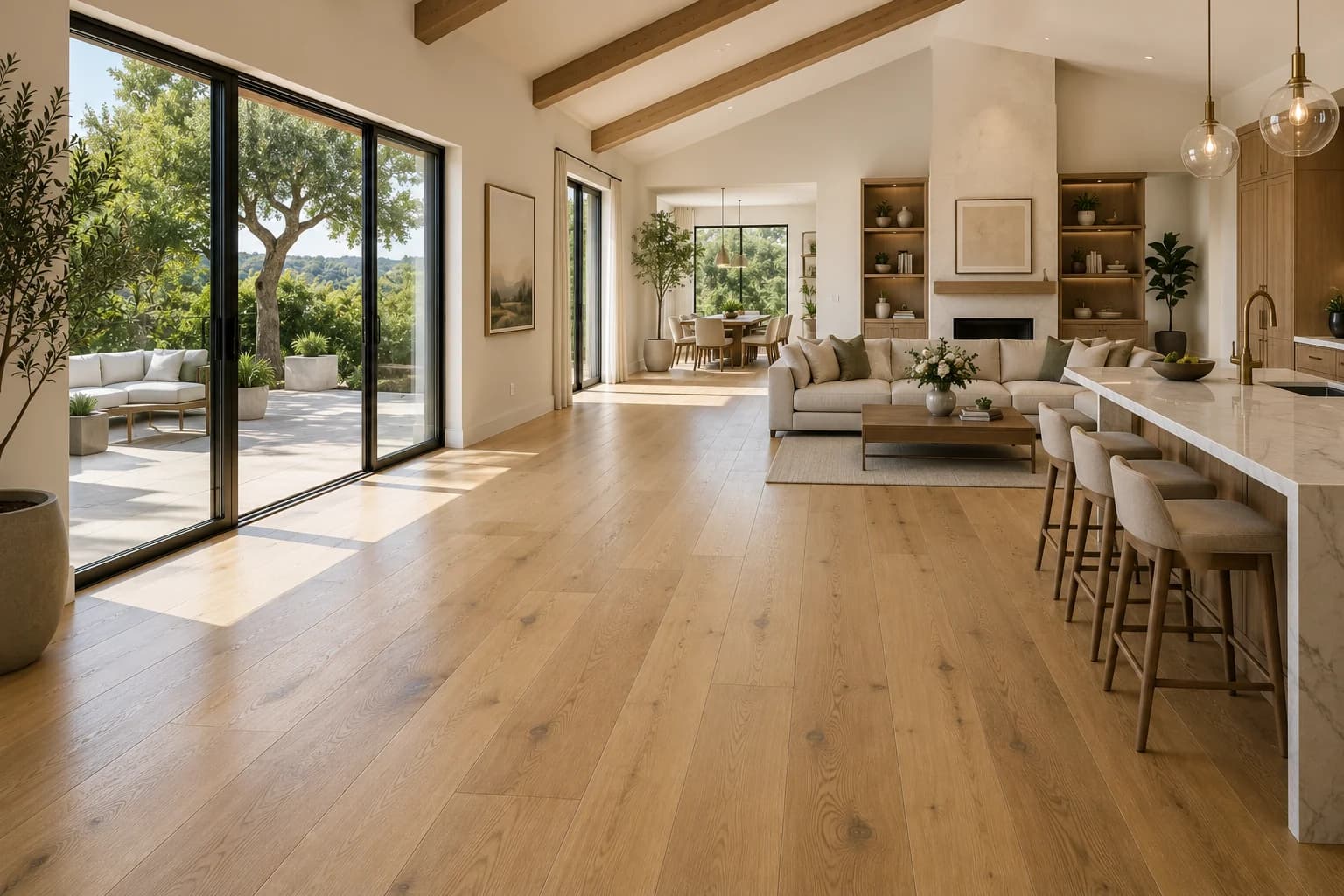
Service Area
Flooring in Healdsburg
Renaissance Floors installs and refinishes hardwood, luxury vinyl, tile, and more for homeowners throughout Healdsburg and the surrounding Sonoma County area.
CSLB #1060673
Licensed & Insured
Est. 2019
Family-Owned
15+ Years
Hands-On Experience
5.0★ Rated
22 Reviews on Thumbtack
Local, Licensed, Accountable
Flooring Contractor Serving Healdsburg
Healdsburg is part of Sonoma County, and it's one of the communities Renaissance Floors regularly works in. We're based in Roseville, CA and serve homeowners across Greater Sacramento & Northern California— from small refinishing jobs to full home installs. Every project starts with an honest look at your subfloor and your goals, followed by a clear, no-pressure estimate. There's no dispatched sales team and no guesswork: you work directly with the crew doing the installation, backed by our CSLB C-15 license and a workmanship warranty on every job.
Wine Country homes lean into indoor-outdoor living, where warm wide-plank oak and durable luxury vinyl both shine. We help you choose flooring that looks at home in everything from a Sonoma ranch to a Napa estate.
Federal wine-appellation boundaries are written through the middle of Healdsburg. The Code of Federal Regulations runs the Russian River Valley boundary south along Healdsburg Avenue 'through the city of Healdsburg,' and runs the Dry Creek Valley boundary along the same road 'through the town of Healdsburg.' Laid over the Census Bureau's city boundary, a UC Davis Library digitization of those appellations puts roughly three-quarters of the city in Russian River Valley and a little under a quarter each in Dry Creek Valley and Alexander Valley, which overlap in places, with all of it inside Northern Sonoma. The Plaza itself tests outside the Alexander Valley line. Those boundaries were drawn to describe grape-growing geography, and they say nothing about the houses inside them. The weather has its own in-town record: NOAA's Healdsburg normals station, sited inside city limits by the Census geocoder, supplies the temperature and rainfall figures on this page.
The street plan is older than any appellation. The City's history page says Harmon Heald built a store and post office in 1857, sold lots downtown and plotted a town complete with a Spanish-style Plaza, and that Healdsburg was officially incorporated ten years later, in 1867. The General Plan calls the Plaza 'one of the few examples of early California town planning still in existence.' The City has since designated two historic districts by zoning overlay: the Johnson Street Historic District, both sides of Johnson Street between Piper Street and Powell Avenue, and the Matheson Street Historic District, both sides of Matheson Street between East Street and First Street. The review triggers the City publishes for those overlays name exterior alterations, larger additions, second stories, front-elevation changes and demolition, and interior demolition that leaves the exterior unchanged is exempt from the historic demolition permit. No City text reviewed here says interiors are never reviewed, so Planning is the first call for work on a designated building.
Most of the houses are far younger than the Plaza. Survey estimates from the Census Bureau for 2020 through 2024 place about 5,100 housing units inside the city, with a median year built of 1981, within about three years. The 1980s stand clearly ahead of every other decade, with about 23 percent of units. Roughly 13 percent date to 1939 or before, an estimate carrying a margin of about four percentage points; close to half the stock predates 1980, and about a fifth went up in 2000 or later. Single-family detached houses account for around 72 percent of units, and owners occupy about 60 percent of occupied homes. Those are citywide shares. A particular house is dated by its own records, and its floor history is known once the current floor comes up.
The City's Building Division handles permits inside city limits, and its code base changed at the start of 2026. The City's Building Code page says the 2025 California codes took effect January 1, 2026, adopted by ordinance. That ordinance, No. 1250, passed November 17, 2025, is posted as a scanned document with no text layer; read by OCR and checked against the page image, it amends item 7 of Building Code Section 105.2, the exempt-work list, to read: 'Painting, papering, tiling, carpeting, cabinets, and similar finish work.' In addition, it replaces the Residential Code's administrative sections with that amended Building Code chapter, so the same list governs houses. The City's online FAQ, meanwhile, still says Healdsburg 'has adopted the 2019 California Code of Regulations,' which conflicts with both the ordinance and the Building Code page. Hardwood installation, sanding and refinishing, and subfloor or structural repair appear nowhere in the amended item, and this page does not stretch the exemption to cover them.
Three local records need a careful read. In October 2019 the Kincade Fire brought what the City Manager's November 8 update called 'the citywide evacuation': police knocked on every door in town, and utility staff ran the water and wastewater systems by hand after PG&E shut down the City's electric transmission source. CAL FIRE's mapped perimeter for that fire stops about a third of a mile outside city limits. Flooding, in the City's words, is mostly a creek matter: 'The Russian River and Foss Creek are the dominant flooding hazards for Healdsburg, with Foss Creek causing most of the flooding in the city.' On faults, the sources disagree. The City's 2022-code Building Design Criteria say the City 'is located on an active portion of the Rodgers Creek fault'; state Alquist-Priolo maps from the California Geological Survey draw no fault zone within city limits, the nearest about 2.4 miles out; and the USGS Quaternary fault database maps a Healdsburg fault that crosses the city. This page does not choose among them.
Renaissance Floors is a licensed California C-15 flooring contractor (CSLB #1060673) based in Roseville. A Healdsburg floor starts with questions a map can't settle for one house: whether the parcel lies inside or outside city limits, whether it sits in the Johnson Street or Matheson Street district, and what the subfloor shows once the old floor is lifted. Free in-home estimates and a workmanship warranty.
Local Coverage
Neighborhoods We Serve in Healdsburg
From Downtown Healdsburg Plaza to the Matheson Street Historic District, Renaissance Floors installs and refinishes floors across Healdsburg.
Recent Work
A Sample of Our Craftsmanship
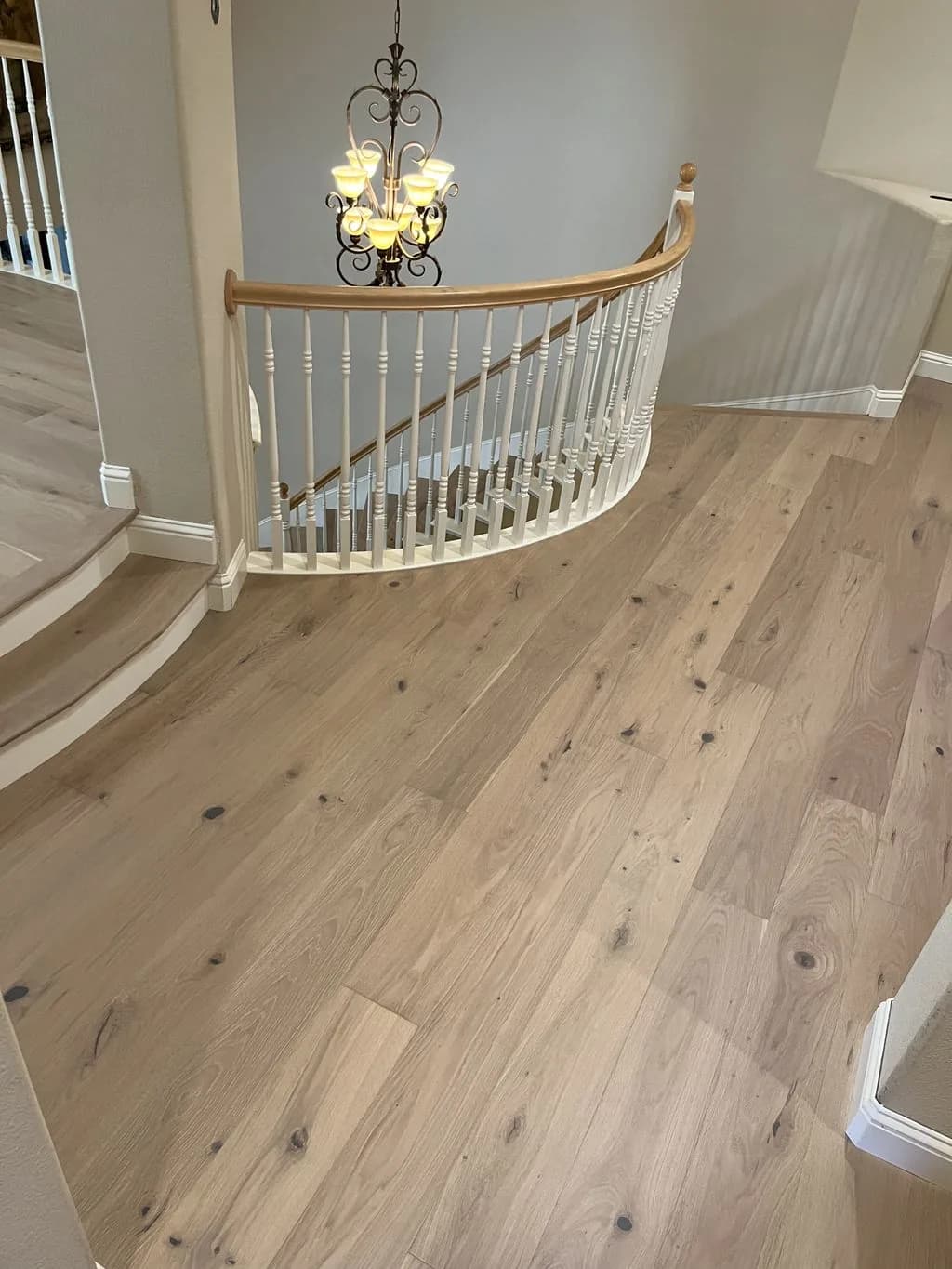
White Oak Hardwood
Great Room & Landing
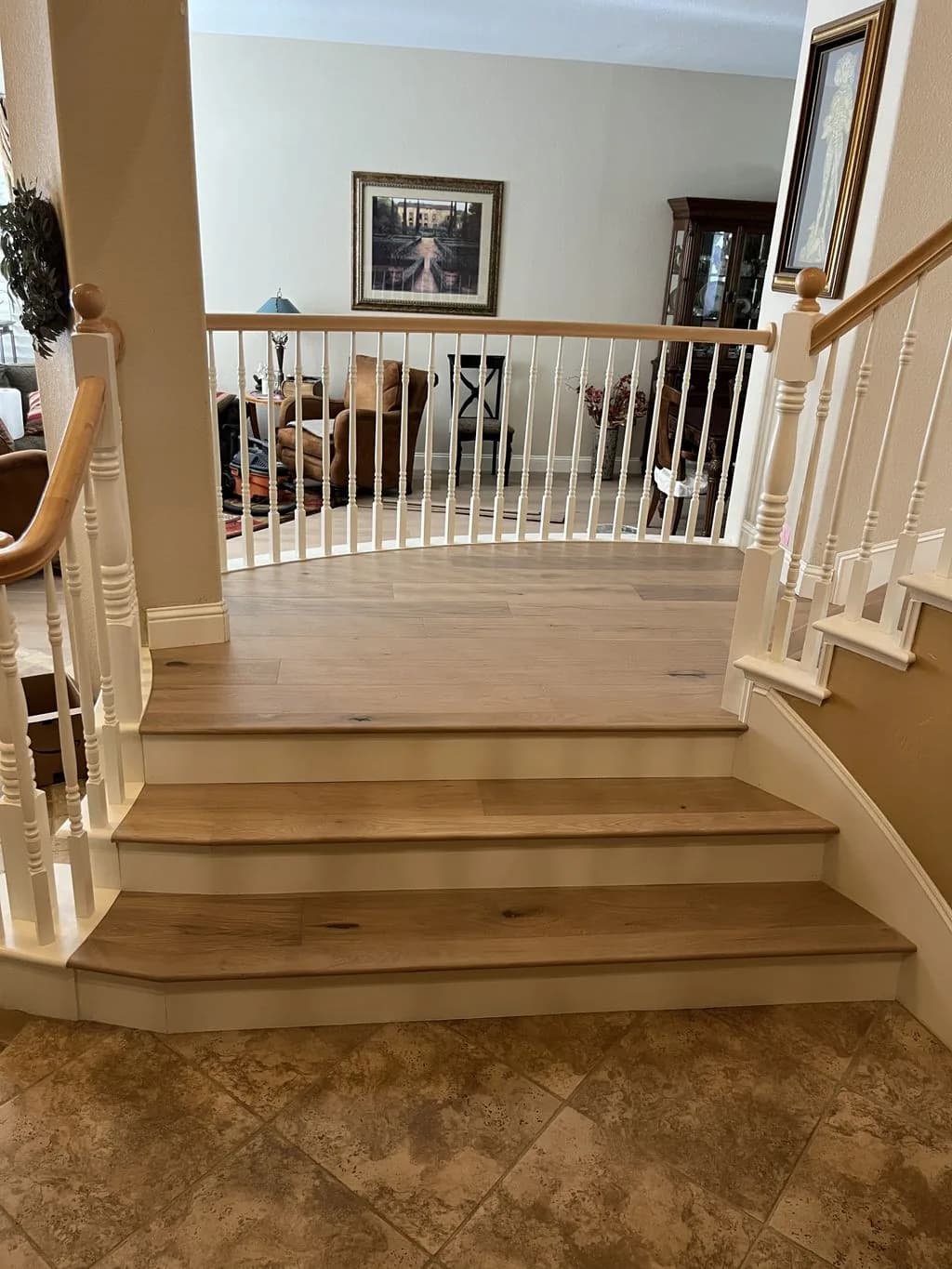
White Oak Hardwood
Staircase & Landing
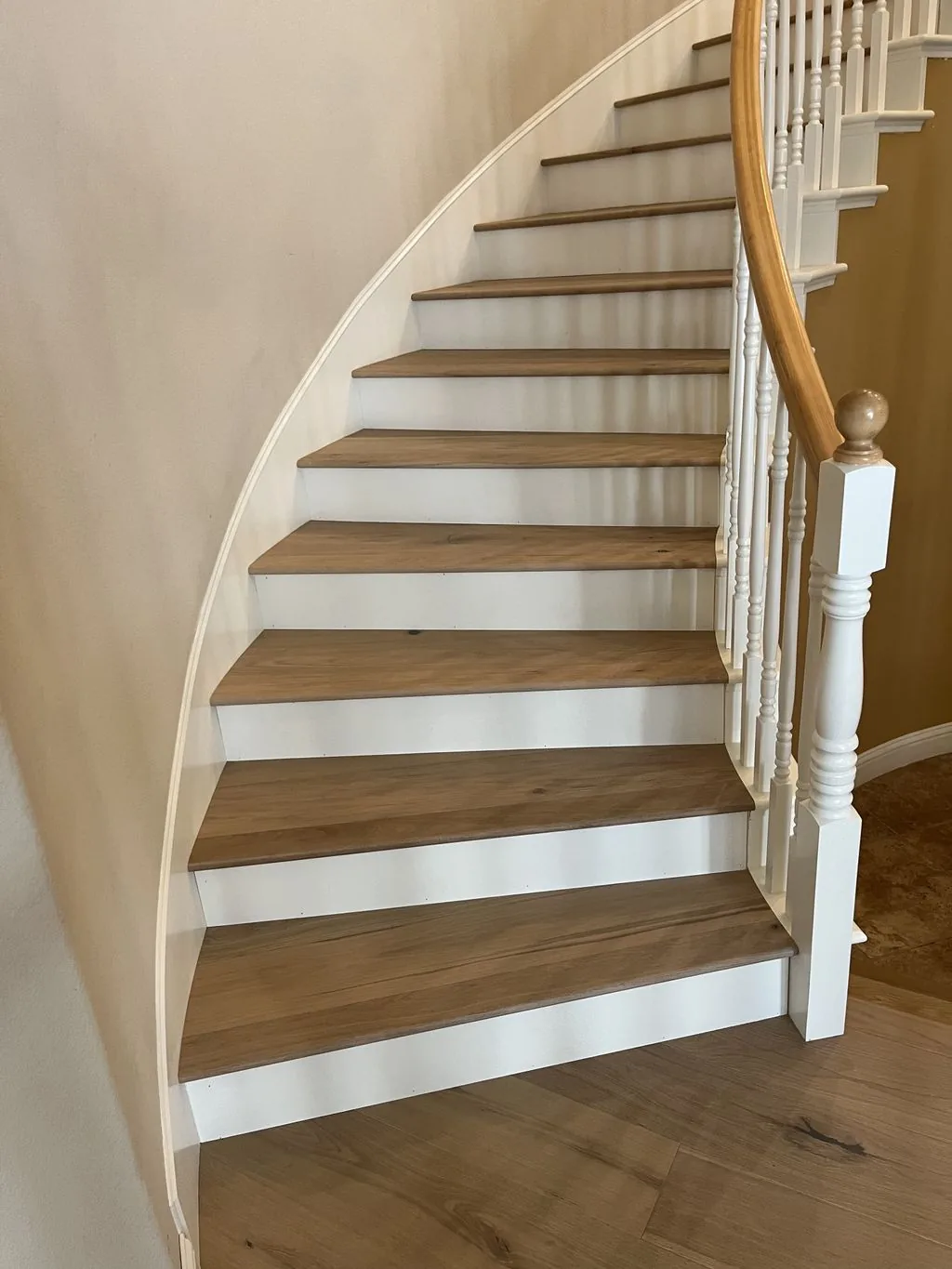
White Oak Hardwood
Curved Staircase
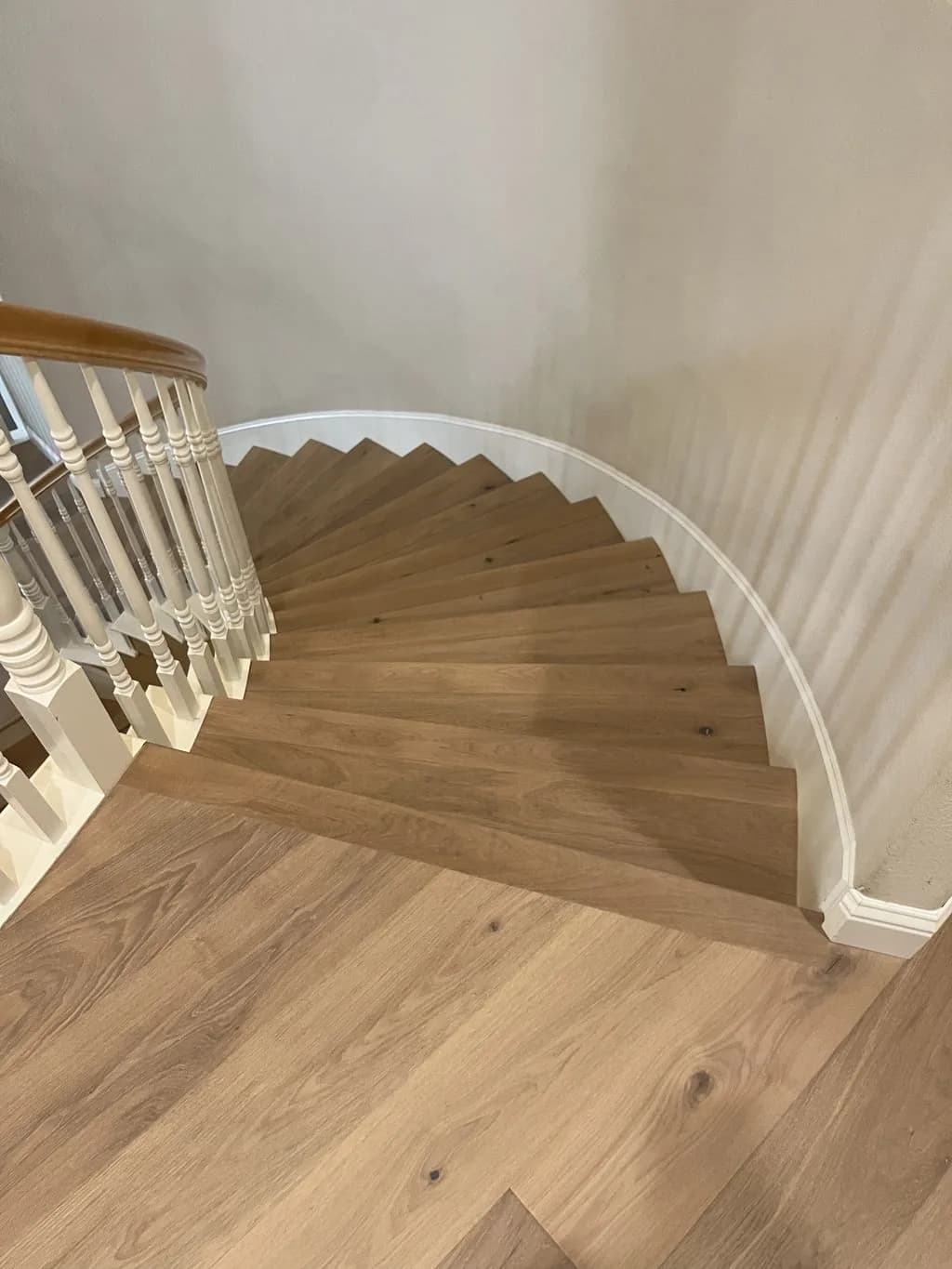
White Oak Hardwood
Stair Treads
Our Services
Flooring Services in Healdsburg
From hardwood to luxury vinyl, here's how we help Healdsburg homeowners upgrade their floors.
Hardwood Flooring
Solid oak, maple, and walkable heirloom-grade hardwood, precisely installed.
Hardwood Flooring in HealdsburgEngineered Hardwood
Real-wood wear layers built for California's climate swings.
Engineered Hardwood in HealdsburgLuxury Vinyl Plank
Waterproof, wood-look LVP for kitchens, baths, and busy households.
Luxury Vinyl Plank in HealdsburgLaminate Flooring
Durable, high-style laminate at a friendly price point.
Laminate Flooring in HealdsburgTile Flooring
Porcelain and ceramic tile set dead-level with crisp grout lines.
Tile Flooring in HealdsburgFloor Installation
Full-service installation from subfloor prep to final baseboard.
Floor Installation in HealdsburgFloor Refinishing
Sand, stain, and reseal tired hardwood back to new.
Floor Refinishing in HealdsburgFloor Repair
Board swaps, water damage, squeaks, and seamless patch-ins.
Floor Repair in HealdsburgLocal Considerations
What Healdsburg Homes Need From a Floor
Climate, home age, and foundation type all shape the right flooring choice in Healdsburg — here's what we account for.
The exempt-work list names tiling and carpeting
In Ordinance No. 1250 (introduced November 3 and passed November 17, 2025), Healdsburg's amended exempt-work item is 'Painting, papering, tiling, carpeting, cabinets, and similar finish work.' Because the ordinance is a scanned PDF, the wording here comes from OCR checked against the page image. It does not say whether an unnamed floor type counts as similar finish work. The City's exempt-work brochure dated May 2020, written before these amendments and silent on flooring, put the default plainly: 'If your project does not appear on this list of exempt work, you should assume that a building permit is required.' Two other City documents are out of step with the ordinance: the online FAQ still cites the 2019 codes, and the Building Design Criteria handout is headed with the 2022 California Building and Residential Codes. For a floor that involves the subfloor, joists or anything structural, the Building Division at 401 Grove Street is the office to ask.
Historic review in the two districts is written around the exterior
The City's overlay FAQ says 'exterior changes to buildings within the Johnson Street and Matheson Street Historic District Overlay will require Design Review by the Planning Department,' with a separate building permit depending on scope. The Land Use Code excerpt the City posts, last updated July 1, 2023, sends 'Exterior alterations, repair and rehabilitation of a primary structure' to staff review and reserves Historic Committee review for new buildings in an overlay, demolition, additions of more than 25 percent of floor area, second stories and significant front-elevation changes. The City's historic resources protection rules exempt 'Demolition of interior partitions, walls, or any other demolition that will not modify the exterior appearance' from the historic demolition permit. One undated City standards document reads more broadly, requiring Committee approval for alteration of a designated historic building 'which results in a permanent physical change,' without limiting that to the exterior. With no City text saying interiors are exempt, Planning gets the question before work on a designated building starts.
Fitch Mountain straddles the city limit
Fitch Mountain is only partly inside Healdsburg. The Census Bureau's geocoder places Villa Chanticleer and tested addresses at 800 and 1200 South Fitch Mountain Road and 1500 North Fitch Mountain Road inside the city, and the peak, 1600 South Fitch Mountain Road, 2000 and 2500 North Fitch Mountain Road and 500 Bailhache Avenue outside it. The City's General Plan refers to the 'unincorporated Fitch Mountain area' and to 'unincorporated pockets' on both sides of South Fitch Mountain Road, rules out annexing that area except under listed circumstances, including a comprehensive study and upgrading the Fitch Mountain Water Company system to City standards, and directs that 'The top of Fitch Mountain shall remain in open space.' The federal Alexander Valley boundary uses the mountain too, running to its '991-foot peak.' Tested addresses on Westside Road and Dry Creek Road fall outside city limits as well. Parcels beyond the line are permitted by Sonoma County, not the City.
Three fault records, and soil that changes point to point
The City's Building Design Criteria, a handout written for the 2022 California codes, state that the City 'is located on an active portion of the Rodgers Creek fault, approximately 4.5 miles from the Maacama Fault.' The California Geological Survey's Alquist-Priolo maps show no fault zone inside city limits: the nearest zone is about 2.4 miles from the city boundary, and the state's mapped Rodgers Creek and Maacama traces are about 2.6 and 3.4 miles away. The USGS Quaternary fault database maps a right-lateral 'Healdsburg fault,' with a slip rate between 0.2 and 1.0 millimeters a year, crossing the city. Those records are set out here as published. The Geological Survey's layer of areas not yet evaluated for seismic hazard zones covers essentially the whole city, so the state has not drawn liquefaction or landslide zones there at all, which says nothing about the hazard either way. Underfoot, USDA soil survey records queried at individual points map Pleasanton loam at the Plaza, Haire clay loam at the Census reference point, with linear extensibility (the survey's gauge of shrink and swell) reaching 7.5 percent, and Dibble clay loam, reaching about 10 percent, at two points on Fitch Mountain's lower slopes inside the city, while points near the river map as sandy Yolo soils. The City's Building page adds that 'Projects within Zone 2 or 3 on the General Plan Slope Stability Map require a geotechnical report that is subject to review by the city Geologist.' When settling framing or a shifting foundation has pulled a floor out of level, the structure is addressed first.
Foss Creek and the layered flood maps
The City's flood page says flooding in Healdsburg 'occurs on a semi-regular basis, both within the FEMA-identified floodplains and in other localized areas,' and names Foss Creek as the source of most of it. An exposure analysis for the City's hazard mitigation plan places about 8 percent of residential structures in a 1 percent or 0.2 percent annual-chance flood zone. FEMA's National Flood Hazard Layer puts roughly 6 percent of city land in Special Flood Hazard Areas. At sampled points, a spot on Foss Creek at the north end of town falls in the regulatory floodway, Veterans Memorial Beach in FEMA's 0.2 percent flood hazard zone, and the Plaza and City Hall in minimal-hazard Zone X. The maps are layered: FEMA's panels carry a 2008 date and have been revised by letters of map revision issued in 2010 and 2020, so a parcel's zone comes from the current map, not a single effective date. In a ground-floor room near a mapped creek, slab and subfloor moisture are measured before a floor is chosen.
A wide summer swing outdoors, and humidity measured 9 miles away
At NOAA's Healdsburg station, the 1991–2020 normals average 88.7°F in July over a 54.3°F low, and August's daily range, 34.6 degrees, is slightly wider than July's 34.4. December brings the coldest average low, 38.7°F, and the most precipitation, 8.51 inches, while July's precipitation normal is 0.00. The annual total of 42.81 inches rests on 18 years of data rather than 30, as NOAA's completeness flag shows. Those are outdoor readings. The humidity record this site pairs with Healdsburg comes from a station about 9 miles away, Charles M. Schulz–Sonoma County Airport. Its hourly air, heated in calculation to 70°F with its moisture held constant, puts the November-to-April median at roughly 39 percent relative humidity, with roughly one hour in five below 30 percent; summer, June through September, comes out near 55 percent, an upper bound for rooms under air conditioning. NWFA guidelines put the indoor target at 30 to 50 percent relative humidity, so acclimation happens in the heated or cooled rooms the wood will serve.
Rule 485 sets finish limits by product type
The County of Sonoma lists Healdsburg in the Northern Sonoma County Air Pollution Control District, not the Bay Area district that covers Santa Rosa, and it is the only city in this site's service area under that district. Its architectural coatings rule, Rule 485, adopted April 9, 2002 and effective January 1, 2003 in the version on file with the California Air Resources Board, predates the combined 'wood coatings' category the other districts in the service area use. It lists clear wood finishes by type: 350 grams per liter of VOC for varnishes and for sanding sealers other than lacquer sanding sealers, 550 for lacquers, including lacquer sanding sealers, and 680 for clear brushing lacquers. Stains are held to 250, and so are floor coatings, which the rule defines as opaque. A product's category follows its label and formulation, so the VOC content printed on the container is the figure to check.
Local Resources & References
Helpful Healdsburg Resources
Authoritative local and industry references for permits, planning, and flooring standards.
- Building Code — the 2025 California codes effective January 1, 2026, adopted by Ordinance 1250City of Healdsburg
- Ordinance No. 1250 (scanned PDF, passed November 17, 2025) — Section 105.2(7) amended to 'Painting, papering, tiling, carpeting, cabinets, and similar finish work'City of Healdsburg
- Historic District (HD) Overlays FAQ — the Johnson Street and Matheson Street districts and exterior design reviewCity of Healdsburg
- Flood — the Russian River and Foss Creek, and the City's hazard mitigation exposure figuresCity of Healdsburg
- Healdsburg 2030 General Plan (amended through December 2023) — the Plaza, incorporation in 1867 and the unincorporated Fitch Mountain areaCity of Healdsburg
- City Manager Update, November 8, 2019 — the Kincade Fire citywide evacuationCity of Healdsburg
- ACS 2020–2024 5-year — year built, median year built, units in structure and tenure, Healdsburg city (place 0633056)US Census
- Northern Sonoma County APCD Rule 485, Architectural Coatings (adopted 4/9/02, effective 1/1/03) — limits by product typeCalifornia Air Resources Board
- 27 CFR 9.66, Russian River Valley viticultural area — the boundary along Healdsburg Avenue 'through the city of Healdsburg'US Code of Federal Regulations (Cornell LII)
External links are provided for reference. Always confirm current requirements with the issuing agency.
Explore Flooring Services in Healdsburg
Nearby
Nearby Cities We Serve in Wine Country
Good to Know
Frequently Asked Questions
Does Renaissance Floors serve Healdsburg?
Yes. We install and refinish flooring throughout Healdsburg and the surrounding Sonoma County area. Call (916) 749-0272 for a free estimate.
What flooring services do you offer in Healdsburg?
We install hardwood, engineered wood, luxury vinyl plank, laminate, tile, and more in Healdsburg, plus floor refinishing, repair, and full-service installation. See the full list below.
Are you licensed to work in Healdsburg?
Yes. We hold CSLB C-15 license #1060673 (C-15 Flooring & Floor Covering) and carry insurance. We're based in Roseville, CA and serve Healdsburg and all of Greater Sacramento & Northern California.
How do I get a free flooring estimate in Healdsburg?
Call (916) 749-0272 or request an estimate online. We'll schedule a convenient in-home visit in Healdsburg, measure your space, and give you an honest, no-pressure quote.
Does new flooring in Healdsburg need a building permit?
That turns on the floor type and what lies under it. Healdsburg's Ordinance No. 1250, read by OCR from the City's scanned copy, lists 'Painting, papering, tiling, carpeting, cabinets, and similar finish work' as exempt from building permits and applies that list to houses. It does not name hardwood, refinishing or subfloor work. The City's online FAQ still cites 2019 codes, which conflicts with the ordinance, so scope questions, above all structural ones, go to the Building Division at 401 Grove Street.
Does historic review cover floors inside a Johnson Street or Matheson Street district home?
The City's published triggers center on the outside of buildings. Its overlay FAQ says exterior changes in the two districts require Design Review, and its Land Use Code excerpt names exterior alterations, larger additions, second stories, front-elevation changes and demolition. Interior demolition that leaves the exterior unchanged is exempt from the historic demolition permit. No City text says interiors are never reviewed, and one older City standards document reads more broadly, so owners of designated buildings confirm with Planning.
Is a Fitch Mountain address inside Healdsburg city limits?
Some are and some are not. Census geocoding places tested addresses at 800 and 1200 South Fitch Mountain Road, 1500 North Fitch Mountain Road and Villa Chanticleer inside the city, and the peak, 1600 South Fitch Mountain Road and 2000 and 2500 North Fitch Mountain Road outside it. The City's General Plan refers to an unincorporated Fitch Mountain area. Parcels outside the line are permitted by Sonoma County rather than the City, so the parcel's status is settled first.
How old are the houses in Healdsburg?
Mostly from the late twentieth century, with an older share. In Census Bureau survey estimates for 2020 through 2024, the median year built is 1981, give or take three years, and the 1980s lead every other decade with about 23 percent of roughly 5,100 housing units. About 13 percent go back to 1939 or before, with a margin of about four points, close to half predate 1980, and about a fifth are from 2000 or later.
Does flooding affect homes in Healdsburg?
Some, mostly along Foss Creek. The City names the Russian River and Foss Creek as its dominant flood hazards, with Foss Creek causing most flooding in the city, and its hazard mitigation analysis places about 8 percent of residential structures in a 1 or 0.2 percent annual-chance zone. FEMA maps about 6 percent of city land as Special Flood Hazard Area. At sampled points the Plaza and City Hall are Zone X, while a Foss Creek point at the north end of town is floodway.
What VOC limits apply to floor finishes in Healdsburg?
Rule 485 of the Northern Sonoma County Air Pollution Control District sets them by product type, in the version on file with the California Air Resources Board: 350 grams per liter for varnishes and for sanding sealers other than lacquer sealers, 550 for lacquers, 680 for clear brushing lacquers and 250 for stains. Floor coatings, an opaque category, are also 250. A product's category follows its label and formulation, so check the VOC content on the container.
Is Healdsburg on an earthquake fault?
The published records disagree. The City's 2022-code Building Design Criteria say the City is on an active portion of the Rodgers Creek fault. No Alquist-Priolo zone appears within city limits on California Geological Survey maps; the closest is about 2.4 miles off. The USGS Quaternary fault database maps a Healdsburg fault crossing the city. This page reports all three without choosing between them, and a Building Division or engineer answers the question for a specific parcel.
How hot does Healdsburg get, and how humid is the air for wood floors?
Summers are hot and rainless, winters wet. NOAA's in-town station averages 88.7°F in July with a 0.00-inch precipitation normal, and December is the wettest month at 8.51 inches. Charles M. Schulz–Sonoma County Airport, about 9 miles away, shows medians near 39 percent relative humidity for November to April and 55 percent for June to September once its outdoor air is figured at 70°F, while NWFA guidance sets 30 to 50 percent indoors.
Related
Keep Reading
Related pages: Wine Country, Floor Repair in Citrus Heights, Hardwood Flooring in Healdsburg, and Engineered Hardwood in Healdsburg.

Ready for Floors You'll Love?
Free, no-pressure flooring estimates throughout Healdsburg and Sonoma County.