Service Area
Flooring in Vacaville
Renaissance Floors installs and refinishes hardwood, luxury vinyl, tile, and more for homeowners throughout Vacaville and the surrounding Solano County area.
CSLB #1060673
Licensed & Insured
Est. 2019
Family-Owned
15+ Years
Hands-On Experience
5.0★ Rated
22 Reviews on Thumbtack
Local, Licensed, Accountable
Flooring Contractor Serving Vacaville
Vacaville is part of Solano County, and it's one of the communities Renaissance Floors regularly works in. We're based in Roseville, CA and serve homeowners across Greater Sacramento & Northern California— from small refinishing jobs to full home installs. Every project starts with an honest look at your subfloor and your goals, followed by a clear, no-pressure estimate. There's no dispatched sales team and no guesswork: you work directly with the crew doing the installation, backed by our CSLB C-15 license and a workmanship warranty on every job.
Wine Country homes lean into indoor-outdoor living, where warm wide-plank oak and durable luxury vinyl both shine. We help you choose flooring that looks at home in everything from a Sonoma ranch to a Napa estate.
Vacaville's housing is mostly a product of the 1970s, 1980s and 1990s. Of about 36,000 housing units the Census Bureau estimates inside city limits for 2020–2024, roughly 61 percent went up in those three decades, led by the 1970s at about 23 percent, and the median year built is 1985. Construction since 2000 accounts for about 22 percent, and houses from before 1940 for under 2 percent. Nearly three in four units are detached single-family houses, and about two-thirds of occupied homes are lived in by their owners. The estimates stop at the city line, so homes in Elmira, Allendale or Hartley aren't counted. In a 1970s or 1980s house, today's floor may be the first one or the latest of several, and that isn't known until it is lifted.
The town itself is far older than its tracts. The City's history page says that when William McDaniel bought land from Juan Manuel Vaca, he agreed that a one-square-mile area would be used to create a township; the land was recorded on December 13, 1851, the township was called Vacaville, and in 1892 it was incorporated as a city. The City's Downtown Specific Plan adds that fires in 1877, 1888 and 1890 destroyed 'whole blocks of the town,' and that a major earthquake struck in 1892. Downtown's historic rules look at the outside of buildings. The Municipal Code's historic preservation overlay covers the Main Street Vacaville Historic District and defines an alteration as 'any exterior change or modification,' and the Specific Plan sends 'all exterior modifications' within the overlay to design review. Neither text sets out design review of interiors, so a new floor inside a Main Street building is a building-code question, not a design-review one.
Permits come from the City of Vacaville Building Division, and the code edition turns on a date. The City's FAQ on the 2025 code update says applications 'submitted on or after January 1, 2026, are subject to compliance with the 2025 California Building Standards Code,' and that the applicable code 'is solely determined by the date a building permit application is filed.' The Municipal Code chapters adopting the state building and residential codes are titled as adopted and amended, but their amendment text could not be retrieved for this page, so whether Vacaville altered the state's list of work exempt from permit is unknown. The state's exempt items include 'painting, papering, tiling, carpeting, cabinets, counter tops and similar finish work'; wood, laminate and vinyl plank floors go unmentioned. The City also tells applicants to 'Verify the address is in Vacaville City Limits,' and with reason: Elmira, Allendale, English Hills Road, Pleasants Valley Road and Hartley are outside the city at the points and roads tested, which puts them under Solano County.
Vacaville's weather is measured inside the city. NOAA's Vacaville station, which the Census geocoder places within city limits, gives a 97.3°F average July high over a 60.2°F low in its 1991–2020 normals; December has both the lowest average low, 39.5°F, and the most precipitation, 5.67 inches of the 25.60 that fall in a normal year. NOAA marks the temperature normals as built from 17 to 19 years of data, with missing months estimated from surrounding stations, rather than thirty complete years. Humidity comes from a second in-city station. In July, from 2015 through 2024, hourly readings at Nut Tree Airport averaged about 70 percent relative humidity at 4 AM and 26 percent at 4 PM, a daily swing of about 44 points. Winter air matters too: the airport's 2015–2025 observations, recalculated for air heated to 70°F with no added moisture, put the November-to-April median near 36 percent relative humidity, so wood is acclimated in the conditioned house, not to the weather outside.
The ground changes across the city. East-side soil samples near Leisure Town and Nut Tree Airport map as Capay and Clear Lake clays, very high in shrink-swell, while downtown and Alamo Drive samples map as loams that shrink and swell less. State seismic maps are largely missing: no Alquist-Priolo fault zone reaches Vacaville, and the California Geological Survey lists all four quadrangles covering the city as unevaluated for liquefaction and landslide zones, which means the hazard hasn't been assessed, not that it is low. Alamo and Ulatis creeks carry most of the roughly 6 percent of the city that FEMA maps as Special Flood Hazard Area. The 2020 LNU Lightning Complex left two records at the western edge. CAL FIRE's final perimeter for the complex's Hennessey fire overlaps about 716 acres of the Census Bureau's current city boundary, while the City's 2023 Safety Element, in a copy headed 'Public Review Draft,' says 'the fire did not enter the Vacaville city limits' and reports no loss of homes within them; CAL FIRE's damage inspection data record no destroyed homes inside the current boundary.
Renaissance Floors is a licensed California C-15 flooring contractor (CSLB #1060673) based in Roseville. For a Vacaville home, the questions this page can't settle from records come first: which agency permits the parcel, whether a slab on clay ground or near a mapped creek is flat and dry, and what condition the subfloor is in once the old floor is up. Free in-home estimates and a workmanship warranty.
Local Coverage
Neighborhoods We Serve in Vacaville
From Alamo Creek to Downtown Vacaville, Renaissance Floors installs and refinishes floors across Vacaville.
Recent Work
A Sample of Our Craftsmanship
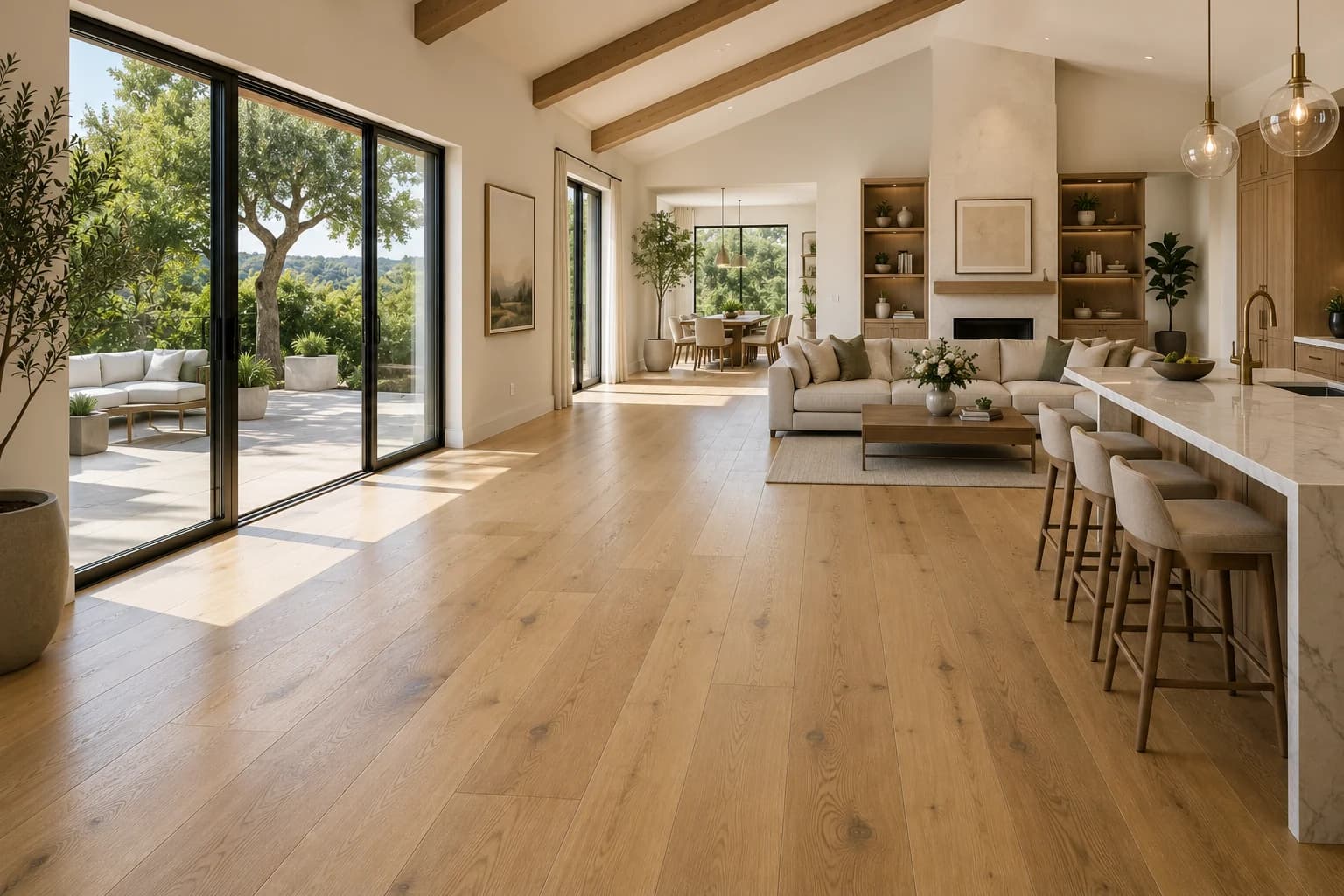
White Oak Hardwood
Great Room & Landing
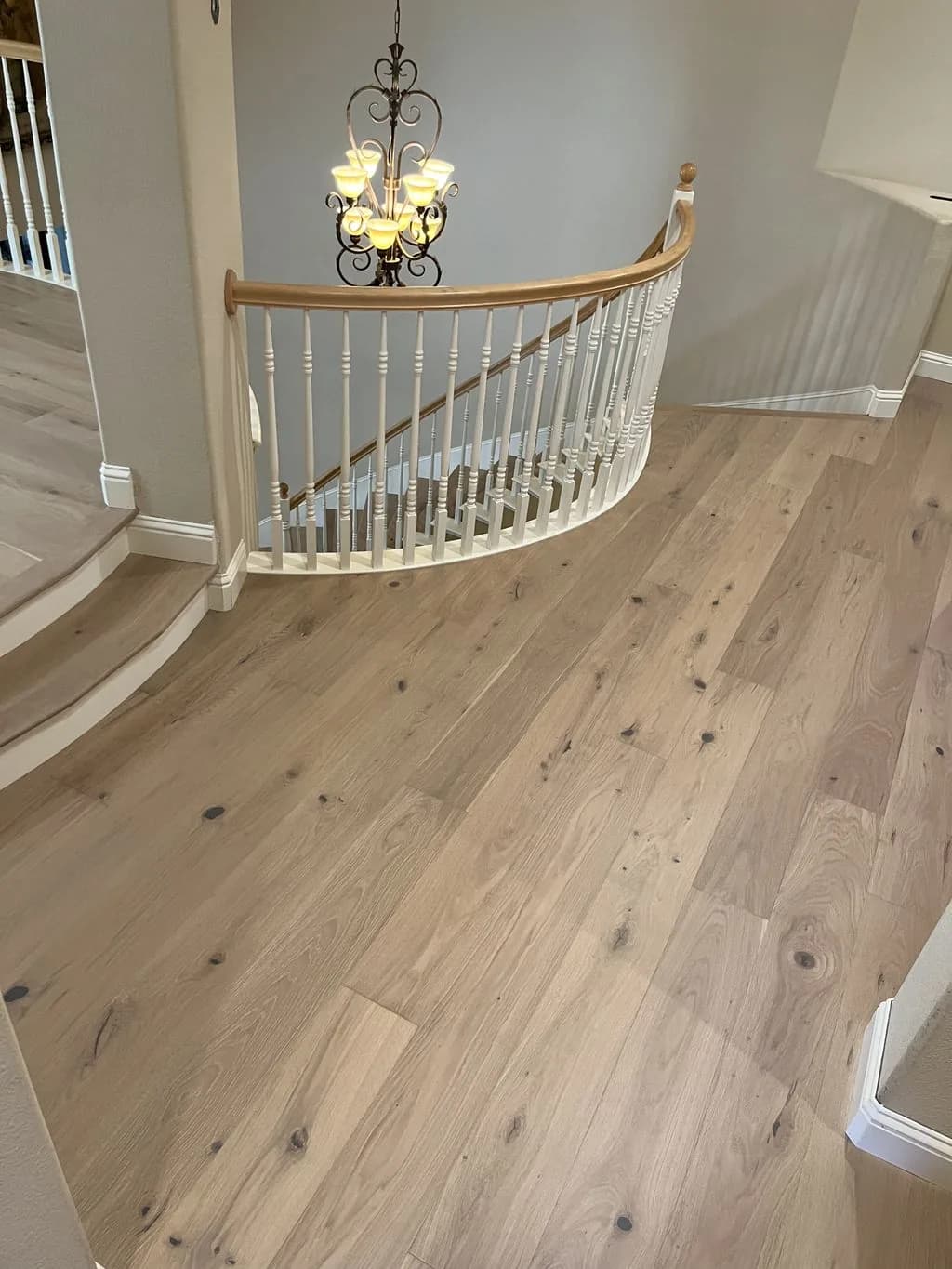
White Oak Hardwood
Staircase & Landing
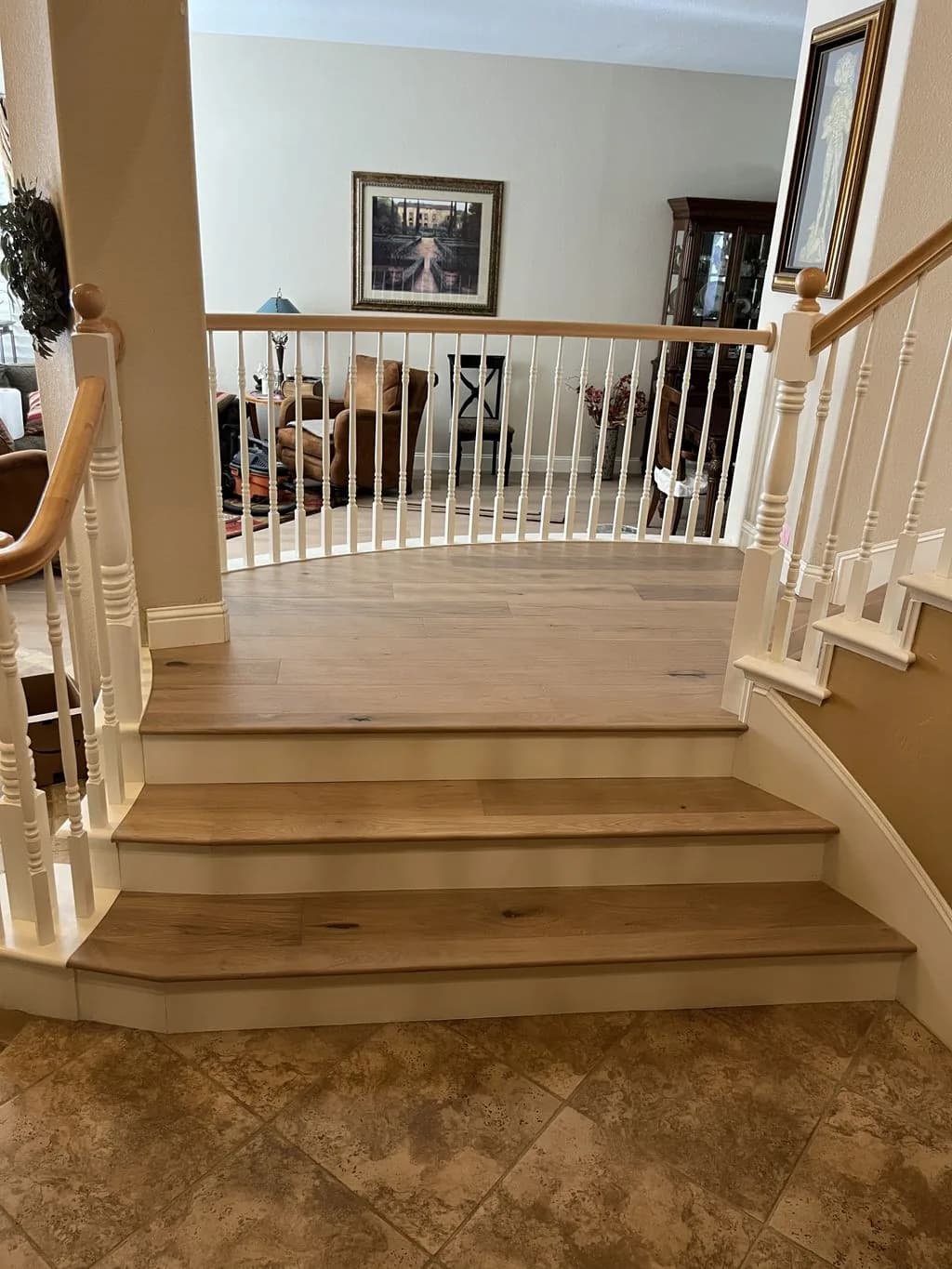
White Oak Hardwood
Curved Staircase
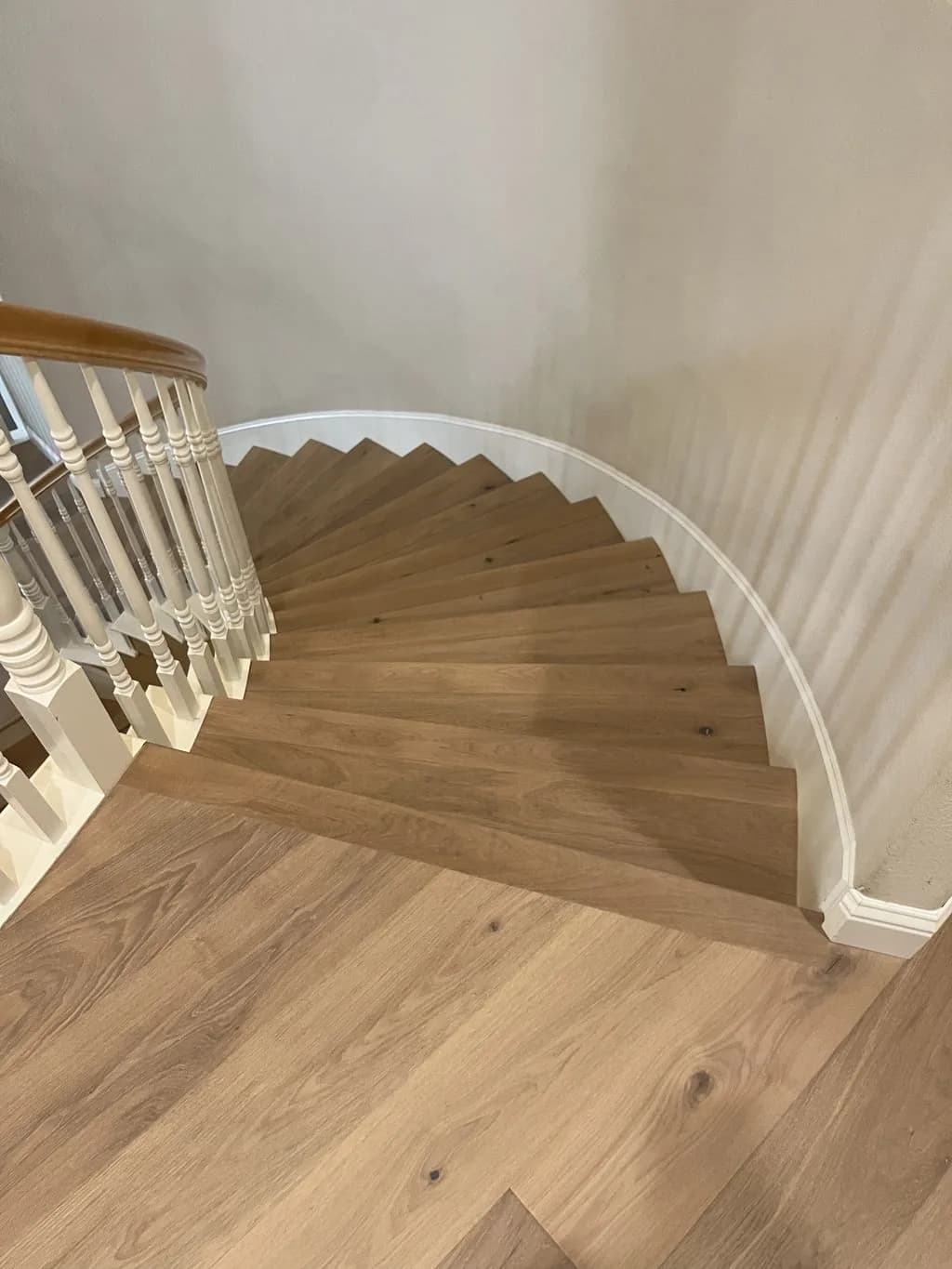
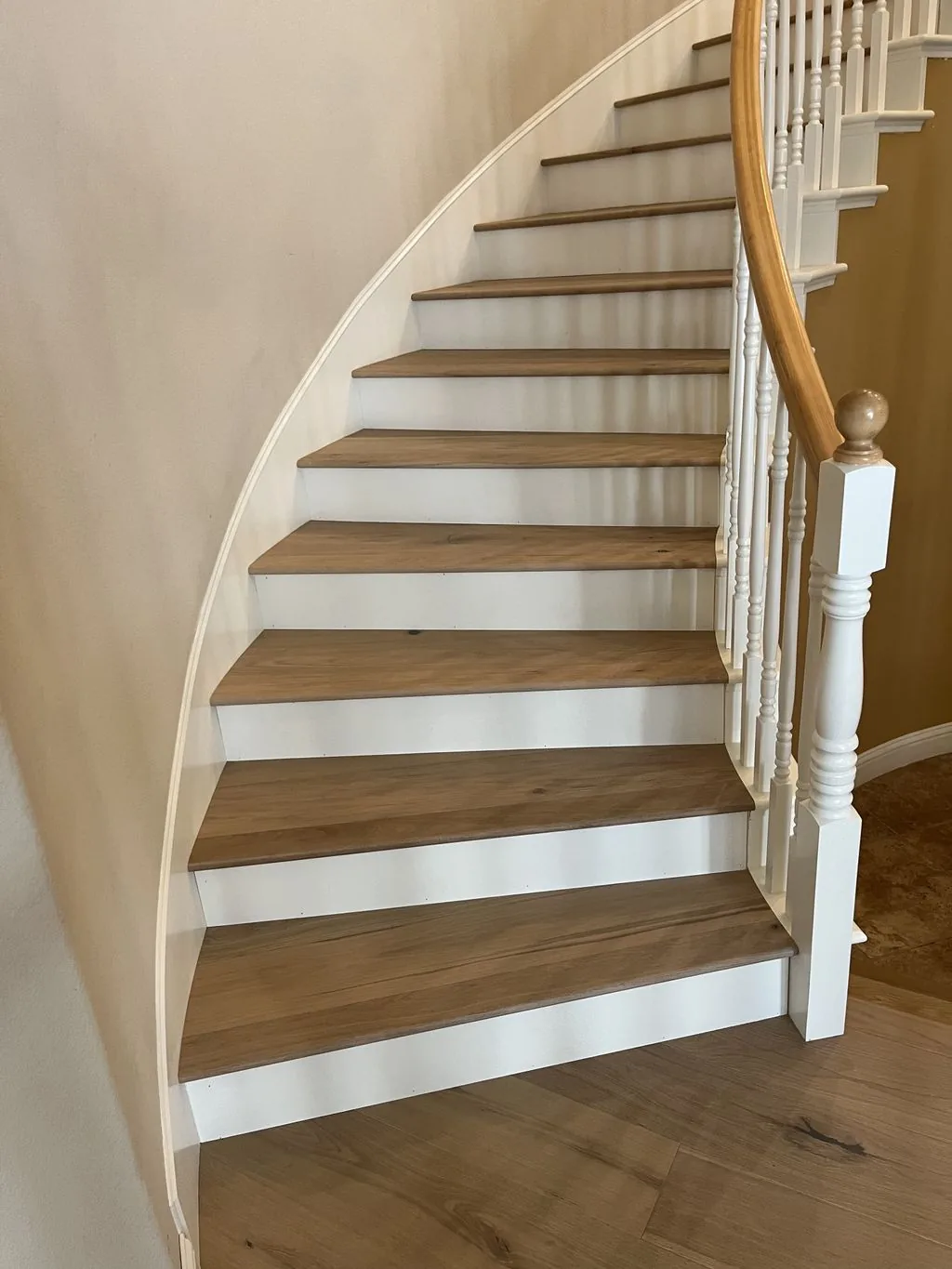
White Oak Hardwood
Stair Treads
Our Services
Flooring Services in Vacaville
From hardwood to luxury vinyl, here's how we help Vacaville homeowners upgrade their floors.
Hardwood Flooring
Solid oak, maple, and walkable heirloom-grade hardwood, precisely installed.
Hardwood Flooring in VacavilleEngineered Hardwood
Real-wood wear layers built for California's climate swings.
Engineered Hardwood in VacavilleLuxury Vinyl Plank
Waterproof, wood-look LVP for kitchens, baths, and busy households.
Luxury Vinyl Plank in VacavilleLaminate Flooring
Durable, high-style laminate at a friendly price point.
Laminate Flooring in VacavilleTile Flooring
Porcelain and ceramic tile set dead-level with crisp grout lines.
Tile Flooring in VacavilleFloor Installation
Full-service installation from subfloor prep to final baseboard.
Floor Installation in VacavilleFloor Refinishing
Sand, stain, and reseal tired hardwood back to new.
Floor Refinishing in VacavilleFloor Repair
Board swaps, water damage, squeaks, and seamless patch-ins.
Floor Repair in VacavilleLocal Considerations
What Vacaville Homes Need From a Floor
Climate, home age, and foundation type all shape the right flooring choice in Vacaville — here's what we account for.
The 2025 code applies by filing date, and the local amendments couldn't be read
The City of Vacaville Building Division issues permits and performs inspections for new construction and alterations within city limits; it is part of Community Development at 650 Merchant Street, and its line is (707) 449-5152. The City's FAQ on the 2025 triennial code update says applications 'submitted on or after January 1, 2026, are subject to compliance with the 2025 California Building Standards Code,' that the edition 'is solely determined by the date a building permit application is filed,' and that 'Permits are valid for one year from the date of permit issuance.' Title 15 of the Municipal Code lists a California Building Code chapter and a California Residential Code chapter, each titled as adopted and amended, but the code host blocked retrieval and no archived copy of the section text was found, so this page cannot say whether Vacaville changed the state's exempt-work list and names no ordinance number. The state list, as published for the 2025 Residential Code, includes 'Painting, papering, tiling, carpeting, cabinets, counter tops and similar finish work.' The item doesn't mention hardwood, laminate or vinyl plank, and nothing here makes any flooring exempt in Vacaville; confirm the scope with the Building Division, above all where subfloor, plumbing or walls are involved. The City's handouts page lists residential bathroom remodel and kitchen remodel sheets and no flooring handout, and applications have gone through eTRAKiT since the City launched it in mid-May 2025.
A Vacaville mailing address can be county land
The City's permit page tells applicants to 'Verify the address is in Vacaville City Limits,' and Census geography shows why. Both USGS place points for Leisure Town and an address at 101 Sequoia Drive fall inside the city, but only about 72 percent of Leisure Town Road's length does. Alamo Drive and Browns Valley Parkway lie wholly inside, while about 72 percent of Browns Valley Road does. Elmira, by contrast, is its own unincorporated census-designated place, though Elmira Road runs almost entirely through Vacaville and 400 Elmira Road geocodes inside it. The Allendale place point, English Hills Road and Pleasants Valley Road are outside city limits, and a sampled point on the northwest edge falls in the Hartley census-designated place. Names built on Alamo Creek, which USGS records as a stream, need care as well. The City says The Farm at Alamo Creek, 210.5 acres at the northeast corner of Leisure Town Road and Elmira Road, was approved by the City Council on November 13, 2018, while a City page archived in January 2026 described the site of a separate proposal, The Fields at Alamo Creek, as 'within unincorporated Solano County.' Permits for parcels beyond the line are Solano County's to issue, and County rules aren't covered here.
Main Street's historic district reviews exteriors
Vacaville's Historic Preservation overlay, Municipal Code section 14.09.130 in a copy archived in September 2024, applies to the Main Street Vacaville Historic District and 'other areas to be determined.' It defines an alteration as 'any exterior change or modification' of a designated historic building or any property in a historic district, and it makes 'All exterior alterations' subject to design review. Chapter 13 of the City's Downtown Specific Plan says the district is generally bounded by the alleys on the north and south sides of Main Street, from Parker Street to the Old Town Hall building, with a short segment of Merchant Street, and that 'all exterior modifications to buildings—historic and nonhistoric—within the DHPD Overlay are subject to Design Review.' The only interior wording found is a duty to maintain exterior and interior portions of buildings as needed to prevent decay of exterior architectural features. The plan names contributing resources including 300, 301 and 344 Main Street and 301 and 349 Merchant Street, and says the School Street Bridge in the overlay is listed on the California Register of Historical Resources. Under these texts, replacing an interior floor in the district is outside design review, though the building code still applies. The plan's Setting chapter also records that fires in 1877, 1888 and 1890 destroyed 'whole blocks of the town.'
A median year built of 1985, and a 1970s peak
Census Bureau estimates for 2020–2024 put Vacaville's median year built at 1985, give or take a year, across about 36,000 housing units. Grouped by age, about 44 percent of those units were built from 1970 through 1989, and the 1990s add about 18 percent more. Roughly 8 percent predate 1960, and about 22 percent are from 2000 or later, including about 2 percent from 2020 on. The 1970s are the single largest decade, at about 23 percent. Nearly three in four units are detached single-family houses; the rest range from attached houses and small multiplexes to buildings of fifty or more units, plus roughly 1,000 mobile homes. About a third of occupied homes are rented, which can put a landlord in the decision. No source behind this page says how many Vacaville houses sit on slabs versus raised framing, and build year isn't used as a stand-in. Once the old floor is off, the checks follow the structure: a slab gets moisture readings and a flatness survey, and a framed floor is checked for loose fastening and bounce.
Vertisol clays in the east, loams downtown, and seismic zones not yet evaluated
Two sampled parts of the city sit on very different soil. On the east side, USDA soil survey data map Capay clay at 101 Sequoia Drive in Leisure Town and Clear Lake clay at 301 County Airport Road beside Nut Tree Airport. Their linear extensibility, the survey's shrink-swell measure, runs 10.8 to 10.9 percent in the Capay unit's upper layers and 10.8 to 12.6 through the Clear Lake unit's top 1.5 meters, and clay makes up more than half of both surface layers. The Clear Lake component is rated poorly drained, and its series description notes a water table that in some areas comes very near the surface during wet winter months; the Capay description places those soils on flood basins and alluvial fans. Downtown and on Alamo Drive the ground is gentler: Brentwood clay loam at 300 Main Street reaches 6.4, and Yolo silty clay loam on Alamo Drive stays at 3.9 or below. The state's seismic maps add little, because they haven't been made here. No Alquist-Priolo Earthquake Fault Zone lies within the city; the nearest is on the Mount George quadrangle, nearly 7 miles away. The California Geological Survey's layer of unevaluated areas covers the Elmira, Allendale, Fairfield North and Mount Vaca quadrangles, the four that span Vacaville, so no liquefaction or landslide zones have been drawn for any part of the city, and the lack of a zone says nothing about the hazard being low. In the City's draft-marked 2023 Safety Element, the City's own liquefaction map, which is not a state zone map, shows risk 'often highest near Ulatis and Alamo Creeks.' Tile and stone don't flex with a moving slab, so on these clays the slab's cracks and flatness are checked first.
Creek flood zones, and two records of the 2020 fire
Roughly 1,130 acres, about 6 percent of Vacaville, fall in Special Flood Hazard Areas on FEMA's National Flood Hazard Layer, most of it in Zones AE and A. FEMA's mapped creek lines inside those areas run about 8.4 miles along Alamo Creek, 4.7 along Ulatis Creek, 2.8 along Old Alamo Creek and 1.6 along Horse Creek. Individual addresses differ: 2000 Alamo Drive is Zone A; 300 Main Street downtown and 101 Sequoia Drive in Leisure Town sit in the area FEMA gives a 0.2 percent annual chance of flooding; and City Hall at 650 Merchant Street is minimal-hazard Zone X. The City's 2023 Safety Element, in a copy headed 'Public Review Draft,' says the floods of December 2002 'caused widespread structural damage within the Ulatis Creek Watershed,' reports flooding on December 31, 2005 along Ulatis Creek at Leisure Town Road, and lists Alamo Creek at Seneca Way and Cheyenne Drive among areas susceptible to flooding. The same document says the 2020 LNU Lightning Complex 'did not enter the Vacaville city limits' and credits grazing with containment 'without the loss of homes within city limits.' CAL FIRE's mapping reads differently at the edge: its final perimeter for the Hennessey fire overlaps about 716 acres of the Census Bureau's current city boundary, in slivers along the west and southwest, and its damage inspection data record no destroyed homes inside that boundary. This page does not reconcile the two. State fire hazard maps show only small Moderate and High zone slivers along the city's hillside edges. For ground-floor rooms close to a mapped creek, measuring slab moisture and weighing products that tolerate getting wet make sense.
Two in-city weather records, and dry heated air at Nut Tree Airport
NOAA's Vacaville station, at about 110 feet and inside city limits, gives a 97.3°F July average high over a 60.2°F low in its 1991–2020 normals. December is the coldest month by average low, 39.5°F against January's 39.6°F, and the wettest, 5.67 inches against January's 5.55. Precipitation totals 25.60 inches a year, and the July normal of 0.00 inches is flagged provisional. NOAA's completeness flags show the temperature normals built from 17 to 19 years of data, with missing months estimated from surrounding stations. The second record is Nut Tree Airport, whose weather station lies inside city limits about 1.4 miles from the Census Bureau's reference point for Vacaville; its hourly readings for July, 2015 through 2024, average about 70 percent relative humidity at 4 AM and 26 percent at 4 PM. Heating changes the picture indoors. Take the same airport's hourly air from 2015 to 2025 and warm it to 70°F without adding moisture, and half of the November-to-April hours fall below about 36 percent relative humidity, about three in ten below 30 percent; the June-to-September median is about 53 percent, an upper bound for a house running air conditioning. The practical target for acclimation is the house with its heating or cooling running, not those station numbers. Site-applied finishes fall under the Yolo-Solano Air Quality Management District, whose jurisdiction includes Vacaville; its Rule 2.14, revised May 8, 2024, sets limits of 275 grams of VOC per liter for wood coatings and 250 for stains.
Local Resources & References
Helpful Vacaville Resources
Authoritative local and industry references for permits, planning, and flooring standards.
- Vacaville's History (Wayback Machine snapshot, June 2, 2025) — the township recorded December 13, 1851 and incorporation in 1892; the live City site refuses automated requestsCity of Vacaville
- Building Division FAQs on the 2025 Triennial Code Update (Wayback Machine snapshot, October 29, 2025) — the filing-date rule and the January 1, 2026 effective dateCity of Vacaville
- Vacaville Municipal Code 14.09.130, Historic Preservation Overlay District (Wayback Machine snapshot, September 19, 2024) — 'any exterior change or modification'City of Vacaville
- 2023 Safety Element (Wayback Machine snapshot; pages headed 'Public Review Draft') — flood history, the City's liquefaction map and its account of the 2020 LNU Lightning ComplexCity of Vacaville
- Vacaville city profile, ACS 2020–2024 5-year (place 0681554) — housing age, structure type and owner or renter occupancyUS Census
- 1991–2020 monthly normals, Vacaville COOP station (USC00049200), located within city limitsNOAA NCEI
- Local Climatological Data, Vacaville Nut Tree Airport ASOS (72482893241) — 2024 hourly observations; the July humidity averages draw on the 2015–2024 filesNOAA NCEI
- Official Series Description, Capay series — clay Vertisols of flood basins and alluvial fansUSDA Natural Resources Conservation Service
- National Flood Hazard Layer map service — flood zone polygons and effective FIRM panel dataFEMA
External links are provided for reference. Always confirm current requirements with the issuing agency.
Explore Flooring Services in Vacaville
Nearby
Nearby Cities We Serve in Wine Country
Good to Know
Frequently Asked Questions
Does Renaissance Floors serve Vacaville?
Yes. We install and refinish flooring throughout Vacaville and the surrounding Solano County area. Call (916) 749-0272 for a free estimate.
What flooring services do you offer in Vacaville?
We install hardwood, engineered wood, luxury vinyl plank, laminate, tile, and more in Vacaville, plus floor refinishing, repair, and full-service installation. See the full list below.
Are you licensed to work in Vacaville?
Yes. We hold CSLB C-15 license #1060673 (C-15 Flooring & Floor Covering) and carry insurance. We're based in Roseville, CA and serve Vacaville and all of Greater Sacramento & Northern California.
How do I get a free flooring estimate in Vacaville?
Call (916) 749-0272 or request an estimate online. We'll schedule a convenient in-home visit in Vacaville, measure your space, and give you an honest, no-pressure quote.
Do I need a permit to replace flooring in Vacaville?
Ask the Building Division before assuming you don't. California's residential code lists 'painting, papering, tiling, carpeting, cabinets, counter tops and similar finish work' as exempt from permits, but Vacaville's Municipal Code adopts that code with local amendments whose text couldn't be retrieved for this page, so whether the City changed the list is unknown. Wood, laminate and vinyl plank aren't mentioned. Call (707) 449-5152 before starting, and mention any subfloor, plumbing or wall work.
Is my address inside Vacaville city limits?
Not necessarily, even with a Vacaville mailing address. Census geography places downtown, both USGS place points for Leisure Town, Alamo Drive and Browns Valley Parkway inside the city, but Elmira is an unincorporated census-designated place, and the Allendale place point, English Hills Road and Pleasants Valley Road are outside it. Leisure Town Road and Browns Valley Road cross the line. The City tells permit applicants to 'Verify the address is in Vacaville City Limits,' and county parcels go to Solano County.
Do Main Street historic district rules cover interior floors?
Not under the code text reviewed for this page. Vacaville's Historic Preservation overlay covers the Main Street Vacaville Historic District and defines an alteration as 'any exterior change or modification,' and the City's Downtown Specific Plan sends 'all exterior modifications' in the overlay to design review. Neither document sets out design review of interiors. Replacing a floor inside a district building still follows the building code, so scope questions go to the Building Division.
How old are most Vacaville homes?
Mostly from the last three decades of the 20th century. About 61 percent of Vacaville's roughly 36,000 housing units were built from 1970 through 1999, according to Census Bureau estimates for 2020–2024, and the median year built is 1985. The 1970s alone account for about 23 percent, while homes older than 1940 are under 2 percent. Construction since 2000 makes up about 22 percent, and nearly three in four units are detached houses.
Does Vacaville have expansive clay soil?
In parts of the city. USDA soil survey data map Capay clay at a sampled Leisure Town address and Clear Lake clay near Nut Tree Airport, whose shrink-swell measure, linear extensibility, reads 10.8 to 12.6 percent, in the very high range. Sampled points downtown and on Alamo Drive map as clay loam and silty clay loam at 6.4 or less. A soil map isn't a site test, so moisture and flatness are measured on the slab itself before a rigid floor is laid.
Could my Vacaville home be in a flood zone?
About 6 percent of the city's area is, mostly along creeks, so check the parcel. FEMA maps those Special Flood Hazard Areas chiefly along Alamo and Ulatis creeks. At sampled points, 2000 Alamo Drive is Zone A, while 300 Main Street downtown falls in a 0.2 percent annual chance area, outside the special flood hazard area. The City's draft-marked 2023 Safety Element records December 2002 flooding in the Ulatis Creek watershed and 2005 flooding along Ulatis Creek at Leisure Town Road.
Is Vacaville in an earthquake fault zone or a liquefaction zone?
No state fault zone reaches the city, and liquefaction hasn't been mapped. The nearest Alquist-Priolo Earthquake Fault Zone is on the Mount George quadrangle, nearly 7 miles away. The California Geological Survey lists all four quadrangles covering Vacaville as unevaluated for liquefaction and landslide zones; the state hasn't drawn those zones for the city, and that gap is not evidence of low hazard. The City's own map, in its draft-marked 2023 Safety Element, puts liquefaction risk often highest near Ulatis and Alamo creeks.
Does Vacaville's heat and dry air affect wood floors?
It shapes how wood is acclimated. July highs at NOAA's in-city Vacaville station average 97.3°F, and at 4 PM on July afternoons Nut Tree Airport's relative humidity averages about 26 percent. In winter, that airport's outdoor air, once heated to 70°F, has a median near 36 percent from November to April, and about three in ten of those hours fall below 30 percent. Because those are outdoor station readings, acclimation and moisture checks happen inside the conditioned house.
Related
Keep Reading
Related pages: Floor Installation in Cool, Floor Refinishing in Cool, Hardwood Flooring in Vacaville, and Engineered Hardwood in Vacaville.

Ready for Floors You'll Love?
Free, no-pressure flooring estimates throughout Vacaville and Solano County.