Service Area
Flooring in Santa Rosa
Renaissance Floors installs and refinishes hardwood, luxury vinyl, tile, and more for homeowners throughout Santa Rosa and the surrounding Sonoma County area.
CSLB #1060673
Licensed & Insured
Est. 2019
Family-Owned
15+ Years
Hands-On Experience
5.0★ Rated
22 Reviews on Thumbtack
Local, Licensed, Accountable
Flooring Contractor Serving Santa Rosa
Santa Rosa is part of Sonoma County, and it's one of the communities Renaissance Floors regularly works in. We're based in Roseville, CA and serve homeowners across Greater Sacramento & Northern California— from small refinishing jobs to full home installs. Every project starts with an honest look at your subfloor and your goals, followed by a clear, no-pressure estimate. There's no dispatched sales team and no guesswork: you work directly with the crew doing the installation, backed by our CSLB C-15 license and a workmanship warranty on every job.
Wine Country homes lean into indoor-outdoor living, where warm wide-plank oak and durable luxury vinyl both shine. We help you choose flooring that looks at home in everything from a Sonoma ranch to a Napa estate.
Santa Rosa has been the seat of Sonoma County since a September 1854 vote moved the county seat from Sonoma, and it incorporated in 1868 by act of the State Legislature; today it is a charter city. The USGS describes it as built on the gently sloping floodplain of Santa Rosa Creek, at about 180 feet above sea level. The Census Bureau's 2020–2024 five-year estimates count about 177,000 residents and about 71,400 housing units, and roughly 58 percent of those units are detached single-family houses, while about 57 percent of occupied homes are owner-occupied. For flooring purposes, Santa Rosa is mostly a city of houses, with its own permit office, its own historic review, and a building record marked by earthquakes in 1906 and 1969 and by the 2017 Tubbs Fire.
The typical home here is middle-aged rather than old. The same estimates put the median year built at 1980. The 1970s are the largest single decade, at about 21 percent of units, and the 1980s come next at about 17 percent; half of all units were built before 1980. Only about 5 percent date from 1939 or earlier, while about 21 percent were built in 2000 or later. The older buildings carry the city's history. The USGS describes downtown's unreinforced masonry as built mostly in the early 1900s, after the 1906 earthquake. Railroad Square was listed on the National Register of Historic Places in 1979 and became the City's first locally designated commercial historic district in 1990, and the Luther Burbank Home and Garden, on the 200 block of Santa Rosa Avenue, is a National Historic Landmark.
Earthquakes are part of that record. The 1906 San Francisco earthquake, whose rupture passed 20 miles west of the city on the San Andreas Fault, destroyed much of downtown Santa Rosa and killed at least 85 people. On the night of October 1, 1969, two earthquakes of magnitude 5.6 and 5.7 struck below the north end of the city, damaging at least 74 buildings in the central business district. The USGS notes that the damage pattern had been attributed to shallow, weak sediments left by streams and to uncompacted fill, and places downtown on the northeast edge of the Cotati basin, which is filled with low-density, uncompressed sediments. In 2016 the USGS mapped the active surface trace of the Rodgers Creek Fault through the central part of the city, and the California Geological Survey re-released the Alquist-Priolo fault zone map for the Santa Rosa quadrangle on February 22, 2024.
The October 2017 Tubbs Fire is the other event that reshaped the city's housing, and the City publishes its rebuild as open data. Its recovery layers, exported December 31, 2025 with permit data current to July 7, 2025, count 2,508 residential units at structure complete across the city, including 1,312 in the Coffey Park area and 1,194 in the Fountaingrove area. Another 504 units were under construction and 298 were permitted but not yet started, and most of that remaining pipeline is multifamily housing in Fountaingrove. Completions were already under way by May 2019, and new editions of the California Building Standards Code took effect in January 2020 and January 2023 while the work went on; the City's rebuild FAQ now states that all buildings must meet the 2025 California Residential Code as amended and adopted by Santa Rosa. A rebuilt home's age comes from its own permit record, not from its street.
NOAA's 1991–2020 normals for the downtown Santa Rosa station put the warmest average high in September, at 83.9°F, ahead of August at 83.0°F and July at 81.6°F. July averages 0.01 inch of rain, and about 83 percent of the 31.53-inch annual total falls from November through March. December has the lowest average low, 38.2°F, and the normals record no snowfall in any month. Summer days swing widely, from a July average low of 52.1°F to an average high of 81.6°F, a spread of about 30 degrees. Hourly records from Charles M. Schulz–Sonoma County Airport, about seven miles away, show outdoor air warmed to 70°F with no moisture added at a median of about 39 percent relative humidity through the heating season and about 55 percent in summer. The National Wood Flooring Association's recommended range for indoor air is 30 to 50 percent.
Renaissance Floors is a licensed California C-15 flooring contractor (CSLB #1060673) based in Roseville. For a Santa Rosa project we start with the house before the floor: which side of the city limit it sits on, whether it is in one of the eight Preservation Districts, when it was built or rebuilt, and what the subfloor shows at an exposed edge. Free in-home estimates, straight answers about permits, and a workmanship warranty.
Local Coverage
Neighborhoods We Serve in Santa Rosa
From Railroad Square to Roseland, Renaissance Floors installs and refinishes floors across Santa Rosa.
Recent Work
A Sample of Our Craftsmanship
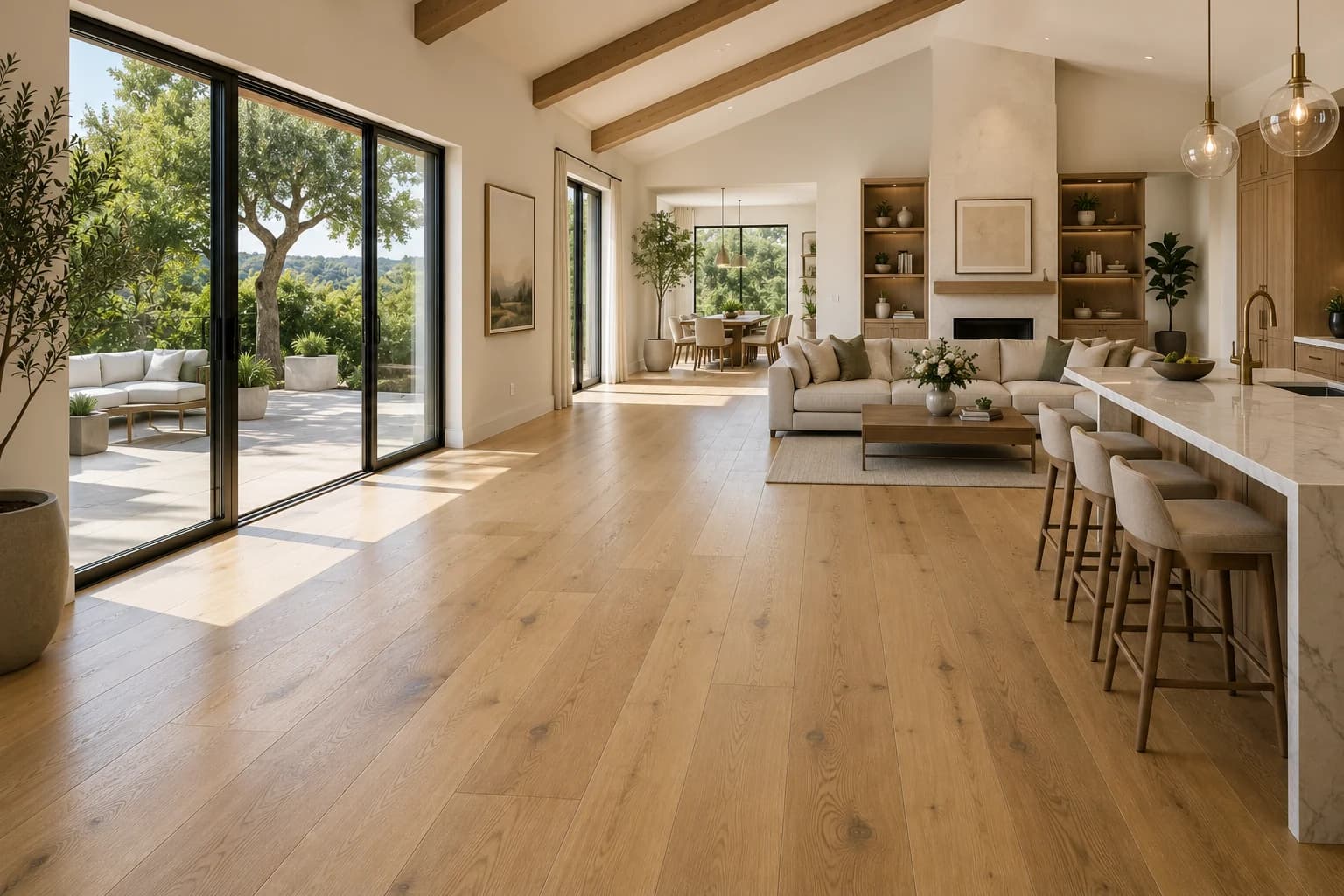
White Oak Hardwood
Great Room & Landing
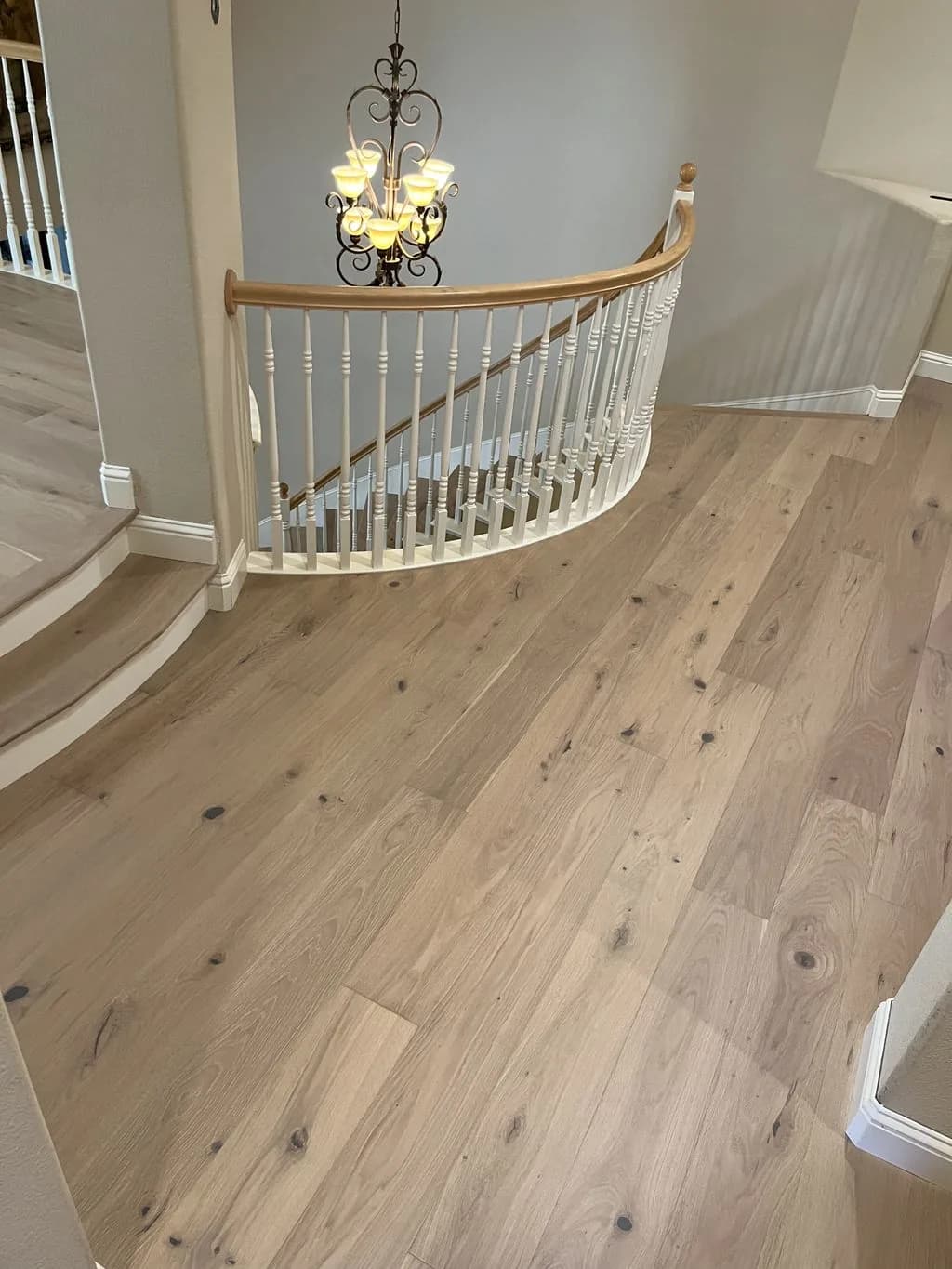
White Oak Hardwood
Staircase & Landing
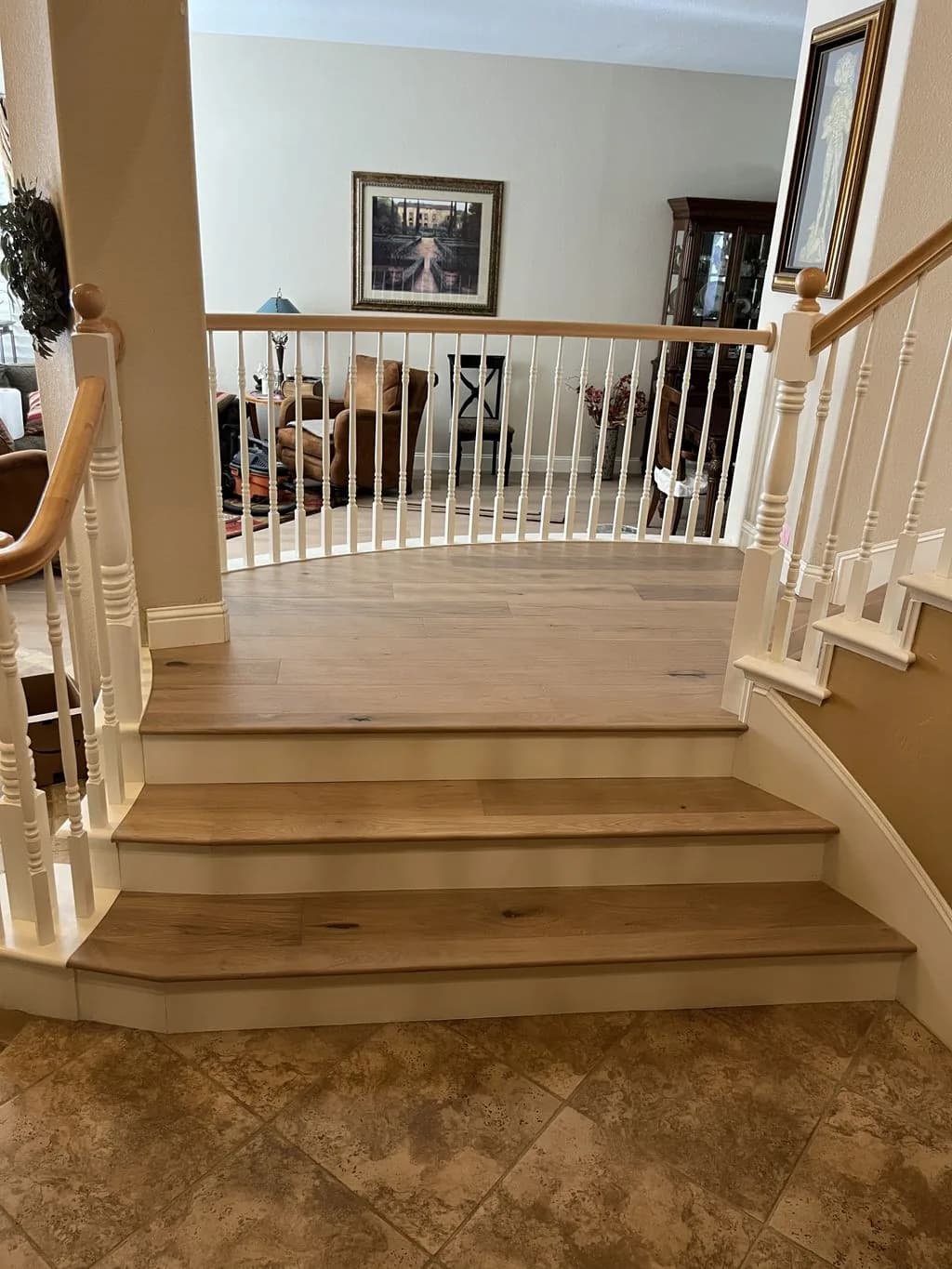
White Oak Hardwood
Curved Staircase
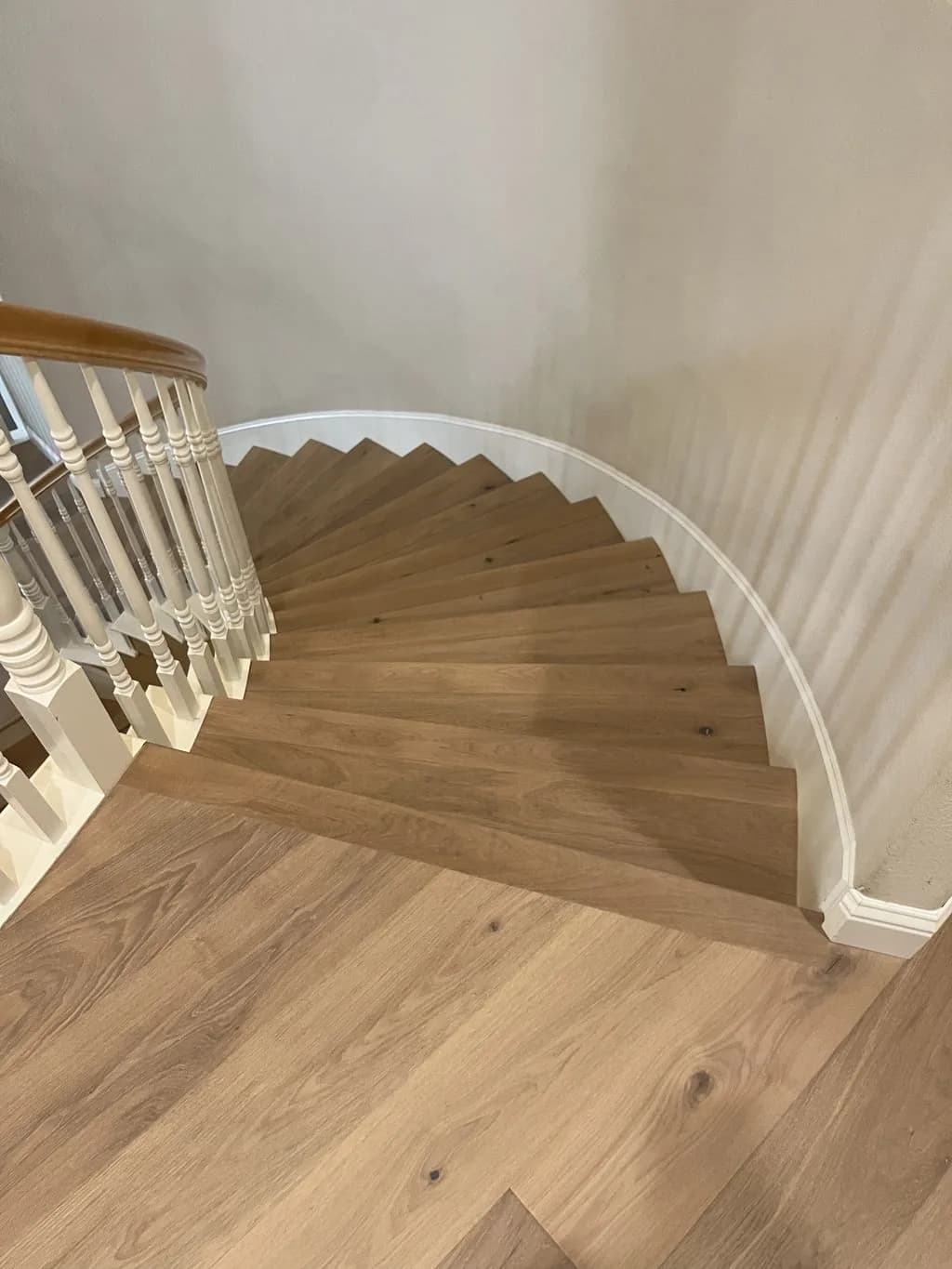
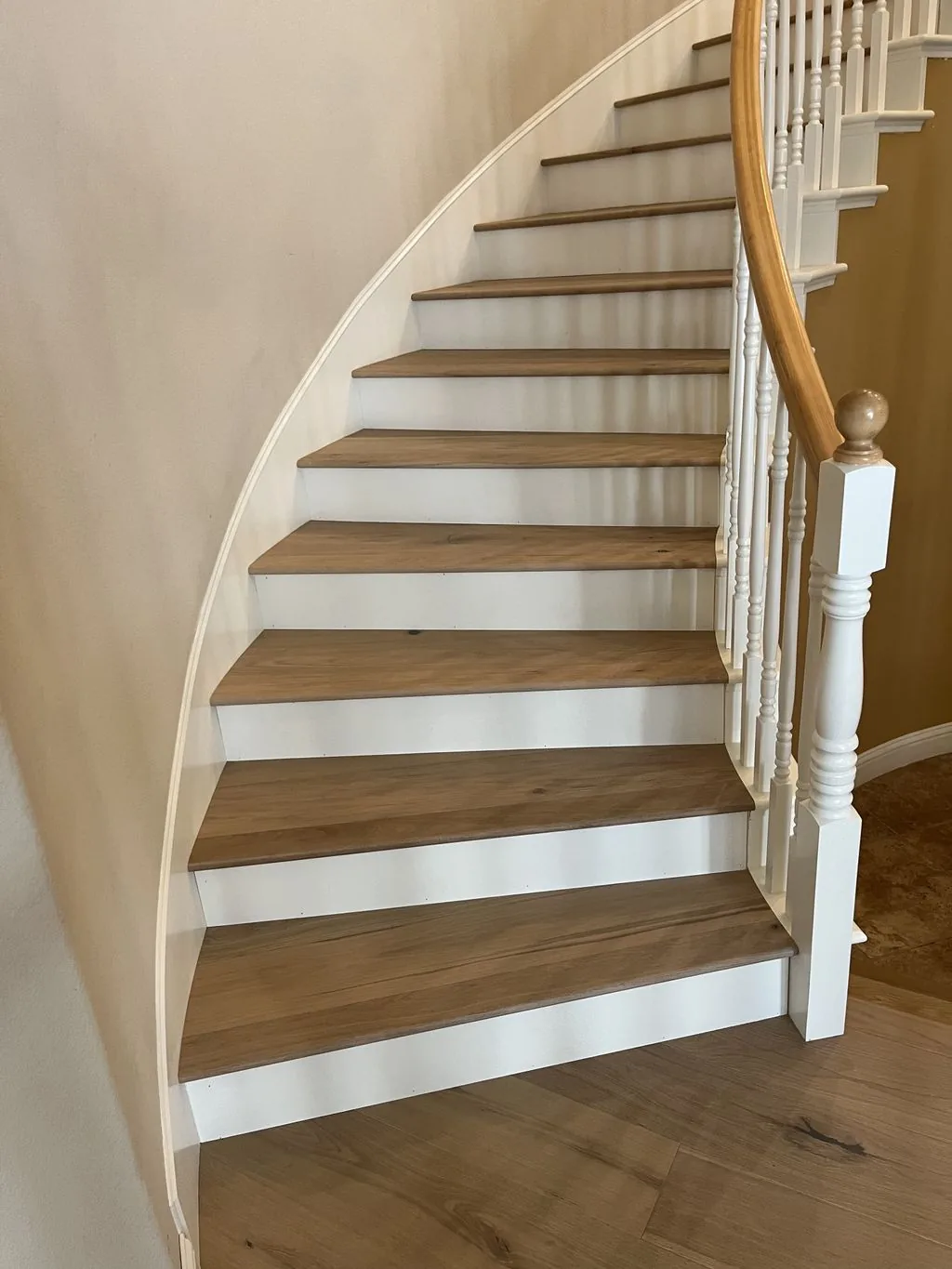
White Oak Hardwood
Stair Treads
Our Services
Flooring Services in Santa Rosa
From hardwood to luxury vinyl, here's how we help Santa Rosa homeowners upgrade their floors.
Hardwood Flooring
Solid oak, maple, and walkable heirloom-grade hardwood, precisely installed.
Hardwood Flooring in Santa RosaEngineered Hardwood
Real-wood wear layers built for California's climate swings.
Engineered Hardwood in Santa RosaLuxury Vinyl Plank
Waterproof, wood-look LVP for kitchens, baths, and busy households.
Luxury Vinyl Plank in Santa RosaLaminate Flooring
Durable, high-style laminate at a friendly price point.
Laminate Flooring in Santa RosaTile Flooring
Porcelain and ceramic tile set dead-level with crisp grout lines.
Tile Flooring in Santa RosaFloor Installation
Full-service installation from subfloor prep to final baseboard.
Floor Installation in Santa RosaFloor Refinishing
Sand, stain, and reseal tired hardwood back to new.
Floor Refinishing in Santa RosaFloor Repair
Board swaps, water damage, squeaks, and seamless patch-ins.
Floor Repair in Santa RosaLocal Considerations
What Santa Rosa Homes Need From a Floor
Climate, home age, and foundation type all shape the right flooring choice in Santa Rosa — here's what we account for.
Historic review covers the outside of the house
Santa Rosa has eight designated Preservation Districts: Burbank Gardens, Cherry Street, McDonald, Olive Park, Railroad Square, Ridgway, St. Rose and West End. Since March 28, 2025 they have been reviewed by the consolidated Design Review and Preservation Board. The City's published procedures for owners of historic properties, written when the Cultural Heritage Board handled review and still linked from the new board's page, are direct: 'The City of Santa Rosa reviews only exterior changes to properties. Interior changes do not require design review approval although they probably will require the owner or contractor to obtain a Building Permit.' The stated purpose is to keep the view from the street. An interior floor is a permit question, not a design-review one.
Permits follow the state code, and the city limit
The City's Building Permits page says a permit 'is required unless it is expressly exempted by the California Building Code,' points to the exemption list in Chapter 1, Section 105, and asks owners not to start a project until they know their permitting obligations. The City does not publish a flooring list of its own. The list we have found that names carpeting, tiling and similar finish work is Permit Sonoma's, and it covers unincorporated county land. That distinction matters here: parts of Rincon Valley and Bennett Valley lie outside the city limit, while Roseland became part of the city on November 1, 2017. Work on the subfloor, framing or foundation is a separate question from the finish floor.
Foundation repair has a written soils trigger
City Policy 2.5.6, last revised in 2011, says a residential remodel with no increase in square footage and no foundation repair or upgrade needs no geotechnical investigation. For foundation replacement or repair, one is required when the design assumes a low expansive soil condition or a soil bearing capacity above 1,500 pounds per square foot, and a City inspector looking at the footing excavation may require one regardless. USDA soil data at single points shows the range underfoot: Zamora silty clay loam at the city's Census reference point, and Clear Lake clay with a linear extensibility of up to about 10 percent at a point in Bennett Valley. Those are points, not a citywide map, so a floor that is out of level because of the foundation starts with the foundation.
The fire rebuild is counted unit by unit
The City's recovery data lists 2,508 residential units at structure complete: 2,158 single-family homes, 254 multifamily units and 96 accessory dwelling units. By area, 1,312 are in Coffey Park and 1,194 in Fountaingrove, with two in Oakmont. Of the 802 units still under construction or permitted but not started, 593 are Fountaingrove multifamily units. Rebuilt homes were finished across several years and several code editions, and the City's rebuild FAQ now requires the 2025 California Residential Code as amended by the City. For a rebuilt house, the permit and completion record is a better guide to when and under which rules it went up than the neighborhood it sits in.
Half the homes predate 1980
Half of Santa Rosa's housing units were built before 1980, and the median home dates to 1980, within a margin of about a year. That is the vintage California's Earthquake Brace + Bolt program is written around: the California Residential Mitigation Program says its retrofit is 'only done on wood-framed, pre-1980 homes with a raised foundation,' and the 2025 eligibility list includes Santa Rosa ZIP codes 95401, 95403, 95404, 95405, 95407 and 95409. ZIP codes do not follow city limits, and eligibility is not a count of raised-floor houses. Where a house does sit over a crawl space, the framing under the floor can be inspected from below before new flooring goes down.
September is the warm month, and winter is the wet one
At NOAA's downtown Santa Rosa normals station the average high is 81.6°F in July, 83.0°F in August and 83.9°F in September, and 26.15 of the year's 31.53 inches of rain fall from November through March. Measured at the Sonoma County airport and warmed to 70°F, outdoor air holds a heating-season median near 39 percent relative humidity, inside the 30 to 50 percent range the National Wood Flooring Association recommends, and a summer median near 55 percent, which is above it and is a ceiling for an air-conditioned house. The Forest Products Laboratory directs that wood be installed at the moisture content it will see in service, so flooring acclimates to the rooms it is going into.
Fault zones, fire areas and floodplains are parcel questions
Several Santa Rosa rules attach to a mapped line rather than a neighborhood. The California Geological Survey re-released the Alquist-Priolo Earthquake Fault Zone for the Santa Rosa quadrangle in 2024, for the Rodgers Creek Fault that the USGS traced through the central city. The City applies Chapter 7A of the Building Code to new construction in its Wildland Urban Interface Fire Area and says its map now reflects an updated 2026 boundary; those are exterior construction rules, not rules about floor coverings. And the City's rebuild guidance requires habitable structures in the floodplain to have a building pad, or finished floor elevation, above the 100-year flood level. None of these can be read from a neighborhood name.
Local Resources & References
Helpful Santa Rosa Resources
Authoritative local and industry references for permits, planning, and flooring standards.
- Building Permits — a permit is required unless expressly exempted by the California Building Code, Chapter 1, Section 105City of Santa Rosa
- Policy 2.5.6, Geotechnical Investigation Requirements — remodels, foundation repair, low expansive soil and 1,500 psf triggersCity of Santa Rosa
- Design Review and Preservation Board — the eight designated Preservation DistrictsCity of Santa Rosa
- Processing Review Procedures for Owners of Historic Properties — 'reviews only exterior changes to properties'City of Santa Rosa
- Resilient City Fire Recovery Progress — residential units by area and statusCity of Santa Rosa (open data)
- Fact Sheet 2019–3035: Santa Rosa's past and future earthquakes — 1906, the 1969 twin earthquakes and the Cotati basinUS Geological Survey
- Rodgers Creek Fault traced through Santa Rosa (2016)US Geological Survey
- 1991–2020 monthly normals, Santa Rosa (USC00047965)NOAA NCEI
- ACS 2020–2024 5-year — year built, median year built, tenure and units in structure, Santa Rosa cityUS Census
External links are provided for reference. Always confirm current requirements with the issuing agency.
Explore Flooring Services in Santa Rosa
Nearby
Nearby Cities We Serve in Wine Country
Good to Know
Frequently Asked Questions
Does Renaissance Floors serve Santa Rosa?
Yes. We install and refinish flooring throughout Santa Rosa and the surrounding Sonoma County area. Call (916) 749-0272 for a free estimate.
What flooring services do you offer in Santa Rosa?
We install hardwood, engineered wood, luxury vinyl plank, laminate, tile, and more in Santa Rosa, plus floor refinishing, repair, and full-service installation. See the full list below.
Are you licensed to work in Santa Rosa?
Yes. We hold CSLB C-15 license #1060673 (C-15 Flooring & Floor Covering) and carry insurance. We're based in Roseville, CA and serve Santa Rosa and all of Greater Sacramento & Northern California.
How do I get a free flooring estimate in Santa Rosa?
Call (916) 749-0272 or request an estimate online. We'll schedule a convenient in-home visit in Santa Rosa, measure your space, and give you an honest, no-pressure quote.
Does historic design review apply to new floors in a Santa Rosa Preservation District?
Not for interior floors, under the City's published guidance. Its procedures for owners of historic properties say the City reviews only exterior changes to properties, and that interior changes do not require design review approval, although they probably will require a building permit. Santa Rosa has eight Preservation Districts, reviewed since March 2025 by the Design Review and Preservation Board. Whether the flooring work needs a permit is a separate question.
Do I need a building permit to replace flooring in Santa Rosa?
It depends on the scope of the work. The City requires a building permit unless the work is expressly exempted by the California Building Code, and it points to the exemption list in Chapter 1, Section 105 rather than publishing a flooring list of its own. A finish floor and work on the subfloor, framing or foundation are different questions, and the City asks owners not to start until they know their permitting obligations.
How old are Santa Rosa homes?
Mostly from the second half of the twentieth century. The Census Bureau's 2020–2024 five-year estimates put the median year built at 1980, with the 1970s the largest single decade at about 21 percent of housing units and the 1980s next at about 17 percent. About 5 percent of units were built in 1939 or earlier, about 21 percent in 2000 or later, and half of all units predate 1980.
How much of the 2017 fire rebuild is finished?
By the City's published count, 2,508 residential units had reached structure complete. The City of Santa Rosa's recovery data, exported December 31, 2025 with permits current to July 7, 2025, includes 1,312 units in the Coffey Park area and 1,194 in the Fountaingrove area. Another 504 units were under construction and 298 were permitted but not started, most of them multifamily units in Fountaingrove.
How humid does Santa Rosa get, and does it matter for wood floors?
Heating-season air sits inside the range recommended for wood floors, and summer air runs above it. Hourly records from Charles M. Schulz–Sonoma County Airport, about seven miles from the city, put outdoor air warmed to 70°F at a median of about 39 percent relative humidity from November through April and about 55 percent from June through September. The National Wood Flooring Association recommends keeping indoor humidity between 30 and 50 percent year-round.
When is Santa Rosa warmest and wettest?
September is the warmest month and December the wettest. NOAA's 1991–2020 normals for the Santa Rosa station put September's average high at 83.9°F, ahead of August at 83.0°F and July at 81.6°F. December averages 6.47 inches of rain in a 31.53-inch year, about 83 percent of the annual total falls from November through March, and July averages 0.01 inch.
Is Santa Rosa earthquake country, and does that matter for older raised-floor houses?
Yes, and it shapes what to check under an older house. The USGS has mapped the active trace of the Rodgers Creek Fault through central Santa Rosa, and the 1906 and 1969 earthquakes both damaged downtown. California's Brace + Bolt retrofit is only done on wood-framed, pre-1980 homes with a raised foundation, its 2025 list includes six Santa Rosa ZIP codes, and about half the city's housing units predate 1980.
Is my home in the City of Santa Rosa or unincorporated Sonoma County?
Check the parcel, because some named areas cross the line. Roseland became part of the city on November 1, 2017, when about 715 acres in five county islands were annexed. Parts of Rincon Valley and Bennett Valley are inside the city limit and parts are not. The answer decides whether the City of Santa Rosa or Permit Sonoma handles a permit, and which exemption list applies.
Related
Keep Reading
Related pages: Laminate Flooring in Concord, Luxury Vinyl Plank in Concord, Hardwood Flooring in Santa Rosa, and Engineered Hardwood in Santa Rosa.

Ready for Floors You'll Love?
Free, no-pressure flooring estimates throughout Santa Rosa and Sonoma County.