Buying Guide
The Best Flooring for High-Traffic Homes and Rentals
Busy households and rental properties need durability and easy upkeep above all else. Here's what actually holds up to constant use.
Buying Guide · 8 min read
Published July 14, 2026 · Updated September 12, 2026
Whether it's a busy family home, a rental property between tenants, or a room that simply never stops seeing foot traffic, high-traffic flooring has different priorities than a formal space that's used occasionally. Durability, ease of maintenance, and how a floor tolerates less-than-ideal care all matter more here than in a low-traffic guest room. The mistake we see most often is specifying a rental or a busy family home the way you would specify your own primary living room — choosing for how it looks on day one rather than for how it fails and what fixing it costs. Here's what actually holds up.
Wear Resistance Is the Top Priority
In high-traffic zones — entries, hallways, kitchens, living rooms, and any room in a rental between tenants — the finish or wear layer takes the brunt of daily abuse. Luxury vinyl plank with a thick wear layer is generally the most wear-resistant option available, since its surface is engineered specifically to resist scuffing and abrasion from constant foot traffic. Tile is essentially immune to wear itself, though grout lines need occasional attention. Hardwood can hold up well too, especially harder species with a durable finish, but it will show fine scratching over time faster than LVP or tile in the busiest zones.
The thing worth understanding is that almost all of this wear is abrasion, not impact. Grit tracked in on shoes is what dulls a finish, and it does so along specific lines rather than across a whole room. That single fact drives most of the decisions below.
Traffic Is Never Evenly Distributed
Walk into a unit that has been rented for eight years and you can read the traffic pattern off the floor. The lane from the front door to the kitchen is dull. The pivot point at the hallway corner is duller. The area under the dining table where nobody walks looks nearly new. Wear concentrates into paths, and it concentrates hardest in the first several feet inside the entry, where shoes still carry the most grit.
This has two practical consequences. First, the entry is worth over-specifying — a harder material, a darker or more varied pattern, and real walk-off matting at the door do more for the whole property than upgrading the floor everywhere else. Second, a floor that can be replaced or repaired in sections lets you address the lane that failed rather than the rooms that did not. That is a structural advantage of plank formats over sheet goods and over refinishable-but-continuous surfaces, and it is why scratches and dents in a rental are usually a repair conversation rather than a replacement one.
Specifying for Abuse, Not for a Showroom
Manufacturers rate products for residential and light commercial use, and the light-commercial tier is where rental and high-traffic specification should start. It is not marketing: the classification reflects a thicker wear layer, denser construction, and a warranty written for heavier use. A product carrying a light-commercial rating — the tier where lines like COREtec and Mannington's ADURA live — is being sold on the assumption that the person walking on it did not pay for it, which is exactly the assumption a landlord should make too.
Two related specifications matter more in a rental than in an owner-occupied home. The first is whether the warranty covers rental or commercial use at all — plenty of residential warranties exclude it outright, which quietly converts a twenty-year guarantee into nothing. The second is whether coverage survives a DIY installation, since many require licensed installation and documented subfloor moisture testing.
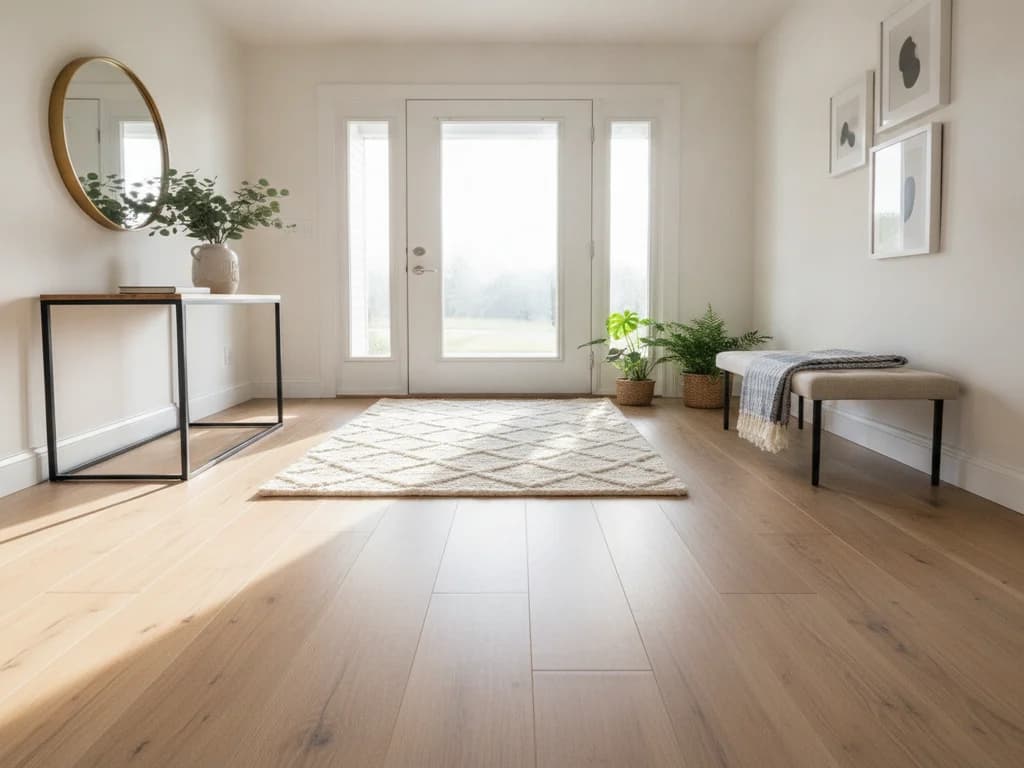
The visual specification matters too, and it is cheaper than the technical one. A mid-tone floor with visible grain variation and a matte surface hides scratching, dust, and pet hair. A dark uniform gloss floor shows every mark, and in a rental it will be photographed for the next listing.
Ease of Maintenance When the Occupant Didn't Choose the Floor
Rental properties benefit from flooring that doesn't demand specialized care, because maintenance falls to whoever happens to be living there rather than to an attentive owner. LVP and tile both clean up with routine mopping and don't require refinishing or specialized products. Hardwood asks more — proper cleaners, prompt spill cleanup, and eventual refinishing — which is a real consideration if the property changes hands or tenants frequently.
The realistic planning assumption is that no care instruction will be followed. Steam mops will be used on floors that should never see one. Rubber-backed mats will sit in the same spot for two years. Furniture will be dragged rather than lifted. A floor specified for that reality is a different floor from one specified for a careful owner, and the realistic version of a luxury vinyl care routine for a rental is a damp mop and nothing else, which is precisely its advantage.
Where you can influence outcomes cheaply: supply felt pads with the unit and note them in the move-in condition report, fit a proper entry mat rather than hoping the tenant buys one, and put the actual cleaning instruction on a card in a kitchen drawer instead of buried on page nine of the lease.
Repairability and the Case for Attic Stock
In a rental, some damage between tenants is a certainty rather than a risk. What separates an expensive floor from a cheap one over ten years is not how well it resists damage but what it costs to fix.
Plank formats allow individual damaged planks to be replaced without redoing an entire room, which is the single most valuable property a rental floor can have. Tile can be repaired in sections too, though matching an exact tile years later is often impossible. Hardwood repairs are more visible unless replacement boards are matched carefully in species, grade, and finish, and a full refinish takes a unit out of service for days.
The decision that makes plank repair actually work is ordering extra material and keeping it. Two or three unopened cartons per unit, stored flat and indoors, means a damaged plank is a same-day fix in year seven — after the product line has been discontinued, the batch has changed color slightly, and matching from a store is no longer possible. Attic stock is the cheapest insurance in the whole project, and running out of it is the most common reason a small repair becomes a whole-room floor repair job.
Water Tolerance for Unpredictable Use
High-traffic homes and rental properties both see less predictable care around water — spills that sit longer than they should, appliance leaks reported late or not at all, and generally less attentive day-to-day habits than an owner-occupied home. Waterproof LVP and tile tolerate that reality far better than hardwood or laminate, which depend on relatively prompt cleanup to avoid seam and core damage.
One caveat worth holding onto: waterproof at the plank is not waterproof at the floor. Water from a failed supply line still runs through the seams of a floating floor and sits on the subfloor underneath, where it cannot dry upward. In a rental, where a leak may go unreported for weeks, that is an argument for prompt maintenance response rather than an argument against vinyl — but it is a real limitation, not a marketing footnote.
Sound Between Units and Between Floors
In multi-unit buildings and two-story homes, impact noise transmitted downward is one of the most common complaints, and hard surfaces make it worse than the carpet they usually replace. Assemblies are rated with IIC for impact sound and STC for airborne sound, and many condo and HOA rules set a minimum IIC rating for any hard-surface installation — worth checking before ordering material, because it can dictate the underlayment and occasionally the product itself.
A dedicated acoustic underlayment under a floating floor makes a genuine difference where the product has no attached pad. Where it does have one, adding a second pad is not the answer — it makes the floor feel spongy and can void the warranty. In a stacked building, this detail causes more disputes after the fact than any other flooring decision.
Cost-Effectiveness Across Multiple Units
For owners managing several units, the number that matters is cost per turnover across a hold period, not price per square foot on installation day. A slightly cheaper product that has to be replaced whole after two tenancies is more expensive than a better one that gets spot-repaired for a decade.
Standardizing across units compounds that advantage. One product in every unit means one set of attic stock covers all of them, any damaged floor is fixable the same day, and nobody has to identify which of four discontinued products is in unit 4B. It also means a partial replacement in one unit can use material pulled from a closet in another and topped up later. That single decision usually saves more over time than shopping each unit for the lowest price.
Where Carpet Still Earns Its Place
Carpet has largely disappeared from rental living areas for good reasons — it holds moisture and odor, shows traffic lanes fastest, and generally gets replaced rather than cleaned between tenants. But it is not obsolete everywhere.
In bedrooms, and particularly in upper-floor units where impact noise is a live issue, carpet still delivers comfort and sound control that no hard surface matches, and bedroom carpet sees a fraction of the traffic that living-room carpet does. Where it is used, a low-pile solution-dyed product in a mid-tone with pattern variation is the specification that survives longest. Stairs are the other case worth considering, since carpet or a runner adds traction on the surface where a fall is most likely and most serious.
What We Recommend for High-Traffic Spaces
For genuinely high-traffic homes and rental properties, quality waterproof LVP with a thick wear layer and a light-commercial rating is usually our first recommendation — it holds up to heavy use, tolerates less-than-ideal care, and is cost-effective to maintain or spot-repair over time. Tile remains an excellent choice for entries and wet-prone areas specifically. Hardwood can still work well in high-traffic homes with attentive owners, and it is the only material that gets fully renewed rather than replaced, which changes the math over a long hold in a property you intend to keep.
Short-term rentals are a slightly different problem, since turnover is measured in days rather than years and luggage wheels, wet boots, and unfamiliar guests all add wear that a long-term tenancy does not.
Matching the Floor to How the Space Is Actually Used
The right flooring for a high-traffic home or rental comes down to being honest about how much day-to-day care the space will realistically get, not just how the floor looks on installation day. Specify for the worst plausible occupant, buy spare material, put a real mat at the door, and choose a pattern that hides what will inevitably happen to it.
If you're flooring a busy family home or a rental property and want a durable, low-maintenance recommendation, Renaissance Floors offers free estimates for homeowners and property owners throughout Roseville and the Greater Sacramento & Northern California area. Call (916) 749-0272.
This article is part of our guide to how to choose a floor, which covers the order the decisions actually come in, and which constraints are real rather than preference.
Explore related
Good to Know
Frequently Asked Questions
What is the best flooring for a rental property?
Luxury vinyl plank, in most cases. It is waterproof at the plank, resists scratching, tolerates tenants who will not follow a care routine, and — decisively — damaged planks can be swapped individually between tenancies without refinishing an entire unit.
Is hardwood a bad idea in a rental?
Not necessarily, but the economics are different. Hardwood can be refinished, which is a genuine advantage over a long hold, but refinishing takes the unit out of service for days and cannot be done between every tenancy. In a high-turnover unit, a floor repaired plank by plank usually wins.
What flooring holds up best to heavy foot traffic?
Tile and luxury vinyl with a thick wear layer. Among woods, a harder species in a character grade with a matte finish hides wear far better than a soft species in a uniform grade with gloss — the wear happens either way, but on one floor you see it and on the other you do not.
How do I choose flooring across multiple rental units?
Standardize. Using one product across units means you hold a single attic stock of matching planks for repairs, and a damaged floor in any unit is fixable the same day. That single decision usually saves more over time than choosing a slightly cheaper product per unit.
Does carpet ever make sense in a rental?
In bedrooms it still has a place for comfort and sound, particularly in upper-floor units. In entries, kitchens, bathrooms, and living areas it is generally the wrong choice — it holds moisture and odor, shows traffic lanes fastest, and is usually replaced rather than cleaned between tenants.
How much extra flooring should I order for a rental?
Enough to keep two or three unopened cartons per unit after the installation waste is accounted for. Product lines are discontinued and dye lots shift, so spare material from the original run is often the only way to make an invisible repair several years later.
Do I need a special underlayment for a rental in a condo building?
Possibly. Many condo and HOA rules require hard-surface floors to meet a minimum IIC impact-sound rating, which the underlayment largely determines. Check the building rules before ordering, because the requirement can dictate both the underlayment and, occasionally, the flooring product itself.
What flooring is easiest for tenants to maintain?
Luxury vinyl and tile, because both are cleaned adequately with a damp mop and neither depends on the occupant using a particular product. The realistic planning assumption is that no care instruction will be followed, so the best rental floor is one that tolerates being cleaned badly.
Should I put the same flooring in every room of a rental?
Usually yes for hard-surface areas, because it simplifies repairs and attic stock and avoids awkward transitions. Bedrooms are the reasonable exception if you want carpet for comfort and sound, particularly in an upper-floor unit where impact noise carries to the neighbor below.
How long should flooring last in a rental property?
It depends far more on traffic and repair practice than on the product. A light-commercial vinyl that gets spot-repaired and has good entry matting can serve through many tenancies, while the same product with no spare stock and no mat at the door reaches replacement much sooner.
Written by
Owner & Lead Installer, Renaissance Floors
15+ years of hands-on flooring experience across Greater Sacramento & Northern California. Works on hardwood and engineered installation, refinishing, subfloor preparation, and moisture testing — and writes these guides from what the jobs actually teach.
CSLB C-15 licence #1060673

Related
Keep Reading
Related pages: Matte vs. Satin Finish, Nail-Down vs. Glue-Down vs. Floating, European White Oak, and French Oak.
Ready for Floors You'll Love?
Ready to talk through your project? Free estimates throughout Greater Sacramento & Northern California.