Comparison
Carpet vs. Luxury Vinyl Plank
Carpet or vinyl plank: which is better for living areas, stairs and rentals?
Carpet or vinyl plank: which is better for living areas, stairs and rentals?
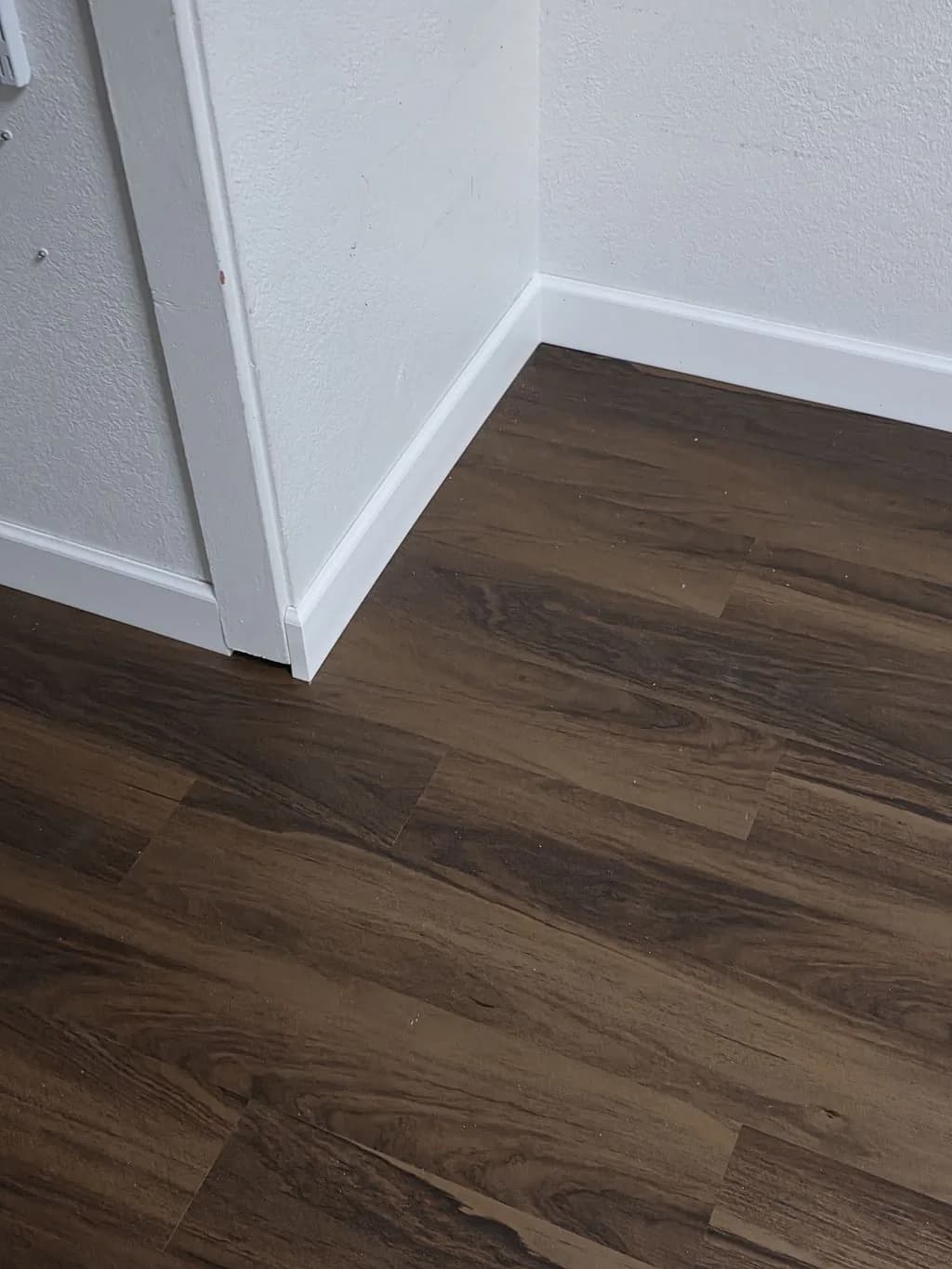
Choose luxury vinyl plank (LVP) for living rooms, family rooms and rentals where spills, pets and quick turnovers are the main risk. Choose carpet where comfort and quiet matter most: an upstairs living area over occupied rooms, a playroom, or stairs where you want a soft, grippy tread. The difference is what each floor does with what lands on it. Carpet holds liquid, dust and pet dander in its pile and pad, so it has to be vacuumed and extracted to stay clean. The Carpet and Rug Institute (CRI) says to vacuum at least once a week and have carpet professionally deep cleaned every 12 to 18 months. Vinyl plank keeps all of that on the surface, where it can be wiped up. Installed costs overlap: about $4–9 per sq ft installed for carpet and $5–10 for LVP, as planning ranges.
Sound is where carpet still has a real edge, and it is worth being precise about it. Footstep noise heard in the room below is rated as an Impact Insulation Class (IIC), measured by ASTM E492 and rated by ASTM E989. That rating belongs to the whole floor-ceiling assembly, not to the floor covering alone. ASTM E2179 measures how much a floor covering improves the rating on a concrete floor, and the standard warns that the same covering on different floor structures will not give the same IIC. So there is no single sound number for carpet or for LVP. Vinyl plank can be quieter than a bare hard floor, and ASTM F3261 allows rigid-core plank to carry an attached underlay backer for reduced noise. In a condo or a stacked rental, get the tested assembly for the floor you plan to install and check it against the association's rule before you rip out carpet.
Stairs and slabs bring their own rules. CRI 105, the residential carpet installation standard, requires a stair nose rounded 3/4 to 1 inch and tack strip on every tread, and it says most residential stretch-in carpet installs do not need moisture testing. LVP over a concrete slab is different: the Resilient Floor Covering Institute (RFCI) says every concrete floor, regardless of age, should be tested for moisture. On stairs, vinyl plank is installed as individual treads and risers with a nosing at every step, so it is more cut and fit work than a straight floor. Neither floor can be refinished. Carpet is replaced when it wears, stains or mats. Damaged vinyl planks are swapped out one at a time.
Decision Framework
When Each One Wins
Conditions, not preferences. If one of these describes your project, it should carry more weight than anything else on this page.
Choose Carpet when…
- Upstairs living areas and lofts over occupied rooms, where footstep noise below is the complaint. Carpet and pad soften impact, though any IIC claim has to come from a tested floor-ceiling assembly (ASTM E492).
- Stairs where you want a soft, continuous tread. CRI 105 covers stair carpet in detail, from the rounded stair nose to tack strip on every tread.
- Playrooms and family rooms where children sit and play on the floor for hours.
- Rooms that sound loud and echoey. Carpet absorbs sound inside the room as well as reducing what reaches the room below.
- Concrete slabs where you want to skip a moisture test. CRI 105 says most residential stretch-in installs do not require one.
- Larger areas on a tighter budget. Carpet's planning range starts about $1 per sq ft below LVP's.
Choose Luxury vinyl plank when…
- Rentals and turnovers, where a floor that wipes clean between tenants saves a deep-clean or replacement each time.
- Homes with pets that have accidents. CRI's own care guide says no carpet is completely stain proof and warns against steam on urine spots, because heat sets the stain and the smell.
- Living rooms and kitchens that open into each other, where spills are a daily event and one floor can run through without a transition.
- Allergy-conscious households that would rather wipe dust off a surface than vacuum it out of pile. EPA lists carpets among the places dust mites are found.
- Entries and hallways where grit, mud and water come in from outside.
- Rooms that flooded or had a leak before. EPA notes that carpet and pad are where mold can hide and that moldy carpet may have to be thrown away.
Side by Side
The Properties That Actually Differ
Where a figure is set by an individual product's instructions rather than by the material itself, the property is described as a relationship. An invented number would be worse than no number.
| Property | Carpet | Luxury vinyl plank |
|---|---|---|
| What the floor is | Textile pile, installed over a separate cushion by stretching onto tack strip (CRI 105), or glued down. | Printed decor under a clear wear layer over a vinyl core. Rigid-core plank has a rigid polymeric core and an optional pre-attached underlayment (RFCI, ASTM F3261). |
| Spills and pet accidents | Liquid soaks into the pile and can reach the pad. CRI: blot, do not scrub, and do not steam-clean urine spots because heat sets the stain and the smell. | Stays on the surface and wipes up. The plank does not absorb it, but liquid left sitting at a seam can still reach the subfloor. |
| Routine cleaning | CRI: vacuum at least once a week, more where traffic is heavier, and replace or empty bags when one-half to two-thirds full. | Sweep or vacuum grit and damp-mop. Grit is what dulls the wear layer. |
| Deep cleaning | CRI: professional deep cleaning every 12 to 18 months. Hand extractors for quick pet clean-ups do not replace it. | No extraction cycle. Follow the product's care instructions for cleaners. |
| Dust, dander and allergens | Held in the pile until vacuumed out. EPA lists carpets among the places dust mites live and advises weekly vacuuming, a HEPA-filter vacuum, and that people with asthma leave the area while it is vacuumed. | Sits on the surface where a damp cloth or mop removes it. EPA's asthma guidance advises dusting often with a damp cloth. |
| Indoor air certification | CRI Green Label Plus for carpet, cushion and adhesive; low-VOC chamber testing using ASTM D5116, a method developed with the U.S. EPA. | FloorScore certifies to California's Section 01350 VOC criteria (CDPH Standard Method v1.2). ASSURE-certified rigid core must pass CDPH v1.2 testing. |
| Impact sound (footsteps below) | Softens impact on most floors. Code and HOA rules rate the whole assembly as IIC by ASTM E492 and E989, so ask for a tested assembly. | Harder surface. An attached underlay backer reduces noise (ASTM F3261). ASTM E2179 measures a covering's improvement on concrete; the same covering on a different floor will not give the same IIC. |
| Sound inside the room | Absorbs, so the room sounds softer. | Reflective; large open rooms can sound loud without rugs and soft furniture. |
| On stairs | CRI 105: stair nose rounded 3/4 to 1 inch, tack strip on each tread, cushion extended over the nose, and pile direction usually running down the stairs. | Cut and fitted tread by tread, with a stair-nose piece at each step and adhesive per the maker's stair instructions. |
| Cushion or underlayment | CRI 105: residential cushion thickness should not exceed 7/16 inch (11 mm) and must follow the carpet maker's recommendation. | Many planks have an attached pad. Add a separate one only if the instructions allow it. |
| Over a concrete slab | CRI 105: most residential stretch-in installations do not require moisture testing. | RFCI: all grade levels of concrete, regardless of age, should be tested for moisture, against the product maker's limit. |
| Common install failure | Ripples. CRI 105 makes a power stretcher mandatory and warns that skipping it may cause wrinkling and buckling. | Separating or peaking planks, usually from an uneven subfloor or missing expansion gaps. |
| Dents and furniture | Crushes and mats in traffic lanes and under furniture feet. | Rated by residual indentation (ASTM F1914). Use wide furniture pads; a narrow, heavy foot can leave a permanent mark. |
| Over radiant heat | CRI 105: radiant-heated substrate surface should not exceed 85°F (29°C), with special care in choosing carpet and cushion. | Only products approved for radiant heat, up to the maker's stated surface temperature. |
| Repair | Patches are possible but seldom invisible. Worn or stained carpet is replaced. | Replace individual planks. Keep a box from the original run. |
| Installed cost (planning range) | About $4–9 per sq ft installed. | About $5–10 per sq ft installed. |
It Depends
The Variables That Decide It
No comparison answers this for every house. These are the specific things about your project that move the answer, and they are worth establishing before you shop.
What lands on the floor
List what actually happens in the room. Juice cups, pet accidents, wet shoes and a dog bowl point to vinyl plank, because everything stays on the surface. CRI's own care guide says no carpet is completely stain proof and that pet accidents call for prompt extraction, not steam. Shoes off, no pets and a quiet household make carpet's downsides small. A rental is the clearest case: you cannot choose the next tenant's habits, so a floor that wipes clean between leases is easier to keep.
What is below the room
A living room on a slab has no one underneath, so impact noise does not matter and vinyl plank's sound weakness disappears. A loft or upstairs family room over a bedroom is different. Footstep noise is rated as IIC for the whole floor-ceiling assembly by ASTM E492, and ASTM E989 notes the rating does not cover the low-frequency thuds under lightweight joist floors. Vinyl with an attached underlay helps, a rug helps more, and carpet with a pad is the softest option. In older raised-foundation homes with a crawlspace, nobody is below, but a squeaky subfloor will telegraph through either floor.
Condo and multifamily rules
In stacked units, sound rules are written as IIC numbers for the tested assembly, so check the association's rule before changing a floor. ASTM E2179 rates how much a floor covering improves impact sound on concrete, and it warns that the same covering on different floor structures will not give the same IIC. Some sound-rated floors were designed with carpet and pad as part of the assembly. A Los Angeles County building code manual, for example, requires the specified carpet and padding to be shown on the plans and installed before final inspection. Swapping that carpet for plank without a tested replacement assembly can break the rule.
Who uses the stairs
Carpet gives a softer tread and more grip in socks, which many families with small children or older parents prefer. CRI 105 sets out how stair carpet goes in, from a rounded stair nose to tack strip on every tread,. Vinyl stairs are easier to keep clean, but every step needs a nosing piece fitted and adhered to the maker's stair instructions. A carpet runner over hard treads is a middle option that keeps grip where feet land.
Allergies, asthma and the cleaning routine
The research on carpet and indoor air is mixed, but the cleaning routine is not. EPA lists carpets among the places dust mites live and advises weekly vacuuming with a HEPA-filter vacuum, with people who have asthma out of the room while it runs. CRI says to vacuum at least weekly and deep clean every 12 to 18 months. A household that will keep that routine can live well with carpet. One that will not is usually better served by a surface where dust is visible and wipes away.
The slab under a tract home
Most Sacramento Valley tract homes sit on concrete slabs. CRI 105 says most residential stretch-in carpet installs do not require moisture testing. Vinyl plank is more moisture-tolerant than sheet vinyl, per RFCI, but RFCI still says every slab should be tested regardless of age, and each plank maker publishes its own limit. Budget for that test with LVP. It decides whether the floor can float on its attached pad, needs a moisture barrier, or should be glued down.
On this site: Carpet Installation, Luxury Vinyl Plank, Stair Runners & Treads, Best Flooring for High Traffic and Rentals, Best Flooring for Dogs and Pets, Carpet Ripples, Pet Urine Stains, Vinyl Plank Separating, Caring for Luxury Vinyl Plank, and Flooring Cost Calculator.
Next decision: Carpet vs. Hard Surface (Bedrooms), LVP vs. Laminate, and SPC vs. WPC.
See all 22 flooring comparisons, or look up a term in the glossary.
Common Questions
Frequently Asked Questions
Is carpet or LVP better for a living room?
For most living rooms with kids, pets or an open kitchen, vinyl plank, because spills and accidents stay on the surface and wipe up. Carpet makes sense where comfort and quiet matter more than spills, especially an upstairs family room over bedrooms. Installed costs overlap: about $4–9 per sq ft for carpet and $5–10 for LVP, as planning ranges.
Is carpet or vinyl plank better for a rental?
Vinyl plank, in most cases. It wipes clean between tenants and a damaged plank can be replaced on its own. Carpet needs regular vacuuming and, per CRI, a professional deep clean every 12 to 18 months, and stained or worn carpet is replaced rather than repaired. The exception is an upper unit in a stacked building, where the association's sound rule may require carpet or a tested sound-rated assembly.
Should stairs be carpet or vinyl plank?
Both work. Carpet gives a softer, grippier tread and is installed under CRI 105, which calls for a stair nose rounded 3/4 to 1 inch and tack strip on every tread. Vinyl stairs are easier to clean but are fitted step by step, with a nosing piece on each tread, so the labor is more than a straight floor. A runner over hard treads is a good compromise for families who want grip and an easy-clean edge.
Is LVP louder than carpet?
Usually, yes, both inside the room and for the room below. How much depends on the whole floor-ceiling assembly, which ASTM E492 tests and ASTM E989 rates as IIC. ASTM F3261 lets rigid-core plank carry an attached underlay for reduced noise, and rugs help a lot. Ask for tested assembly data if a condo association has a sound rule.
Is carpet bad for allergies?
It depends on the cleaning. EPA lists carpets among the places dust mites are found and advises vacuuming weekly with a HEPA-filter vacuum and keeping people with asthma out of the room while vacuuming. A hard surface lets you see the dust and wipe it away. If someone in the house has dust-mite or pet allergies and the cleaning routine is uncertain, vinyl plank is the easier floor to keep clean.
Which is better for dogs and cats?
Vinyl plank for accidents and shedding, since everything stays on the surface. CRI's care guide advises vacuuming more often in pet homes and warns not to use a steam cleaner on urine spots, because heat sets the stain and the smell. Claws can scratch a vinyl wear layer, so trim nails and pick a product with a thicker wear layer for big dogs.
Do I need a moisture test before installing on a concrete slab?
For vinyl plank, yes. RFCI says every concrete floor, at any grade level and regardless of age, should be tested against the product maker's limit. For carpet, CRI 105 says most residential stretch-in installations do not require moisture testing, though glue-down carpet follows its maker's limits.
Why does carpet ripple, and does LVP have a similar problem?
Carpet ripples when it was not stretched tight enough. CRI 105 makes a power stretcher mandatory and warns that skipping it may cause wrinkling and buckling. Vinyl plank's version is planks separating or peaking, usually from an uneven subfloor, missing expansion space or a big temperature swing.
Which floor is healthier for indoor air?
Both categories have third-party low-emission programs. Carpet, cushion and adhesive can carry CRI Green Label Plus, which uses chamber testing under ASTM D5116. Vinyl flooring can carry FloorScore, which certifies to California's Section 01350 VOC criteria, and ASSURE-certified rigid core must pass CDPH Standard Method v1.2 testing. Look for the label on the specific product.
Sources
Where These Specifics Come From
Industry guidelines, manufacturer instructions, and regulations cited on this page.
- Cleaning and Maintenance (homes) — vacuum at least weekly, bag one-half to two-thirds full, deep clean every 12 to 18 months, blot don't scrub, no steam on urine, no carpet completely stain proofThe Carpet and Rug Institute
- CRI 105 Standard for Installation of Residential Carpet — cushion ≤7/16 in, mandatory power stretching, stairs, moisture testing, radiant ≤85°FThe Carpet and Rug Institute
- Green Label Plus — low-VOC testing for carpet, cushion and adhesive; ASTM D5116 chamber methodThe Carpet and Rug Institute
- Flooring Types — LVT and rigid core/multilayer definitionsResilient Floor Covering Institute
- ASSURE Certified and FloorScore — CDPH Standard Method v1.2, California Section 01350Resilient Floor Covering Institute
- Moisture Mitigation: Installation Considerations for Resilient Floor Covering — test all slabs, LVT/LVP moisture toleranceResilient Floor Covering Institute
- E492 — Laboratory Measurement of Impact Sound Transmission Through Floor-Ceiling Assemblies Using the Tapping Machine (scope)ASTM International
- E989 — Determination of Single-Number Impact Sound Ratings, including IIC (scope)ASTM International
- E2179 — Effectiveness of Floor Coverings in Reducing Impact Sound Transmission Through Concrete Floors (scope)ASTM International
- F3261 — Resilient Flooring in Modular Format with Rigid Polymeric Core (scope; attached underlay backer)ASTM International
- F1914 — Short-Term and Residual Indentation of Resilient Floor Covering (scope)ASTM International
- Asthma Triggers: Gain Control — dust mites, pets, vacuuming and HEPA guidanceU.S. Environmental Protection Agency
- A Brief Guide to Mold, Moisture and Your Home — moldy carpet, hidden mold under carpets and padsU.S. Environmental Protection Agency
- Building Code Manual 1207 — Sound Transmission Control Between Dwelling Units (2011 LACBC): carpet and padding on plansCounty of Los Angeles Department of Public Works
Ready to price it for your house?
See how we install carpet installation, check carpet installation cost, or skip ahead: a free in-home estimate means Alex measures the rooms, checks the subfloor, and quotes the exact product — no planning ranges.
Comparison written by
Owner & Lead Installer, Renaissance Floors
15+ years of hands-on flooring experience across Greater Sacramento & Northern California. Works on hardwood and engineered installation, refinishing, subfloor preparation, and moisture testing — and writes these guides from what the jobs actually teach.
Licensed California contractor, CSLB C-15 license #1060673(verify ↗)

Get a Straight Answer for Your House
Free estimates across Greater Sacramento & Northern California. We'll look at your subfloor and your rooms and tell you which of these actually fits — call (916) 749-0272.